Seaweed Supply Chain Traceability for Ingredient Buyers
Seaweed ingredient quality starts well before extraction. It starts with the bed, the farm line, the harvest window, the rinse, the hold time, the dryer, the storage conditions, and the documentation that follows each lot into the plant.
For ingredient buyers, traceability is not a paperwork exercise. It is a control system for commercial risk. When origin and handling are clear, processors can set tighter production windows, reduce avoidable variability, and protect the specification that matters downstream.
Thalrix works with seaweed processing plants where raw material variation shows up quickly in viscosity, separation behavior, solids handling, yield, color, odor, and extract consistency. As an enzyme supplier for seaweed processing, we see traceability as part of process control: better raw material intelligence supports more predictable hydrolysis, cleaner separation, and more reliable ingredient output.
Why traceability matters in seaweed ingredients
Seaweed is biologically active, seasonally variable, and highly exposed to its marine environment. The same species can behave differently based on:
- growing area and water conditions
- harvest season and maturity
- wild harvest versus cultivation method
- time between harvest, washing, drying, and milling
- foreign matter load, sand, shell, and epiphytes
- moisture history during storage and shipping
- blending decisions before extraction
That variability reaches the extraction floor. A batch with higher insoluble load can slow screening. A batch with different polysaccharide structure can shift viscosity. A batch with poorer handling history can create odor, color, or microbial concerns. Traceability gives buyers and processors the facts needed to separate normal biological range from avoidable supply-chain risk.
Origin: more than a country of supply
Country of origin is only the first layer. Serious ingredient buyers should expect enough location detail to support risk assessment without compromising supplier confidentiality.
Useful origin records may include:
- harvest zone, coastal region, or farm area
- species identity and local naming cross-checks
- wild-harvest license or aquaculture site reference
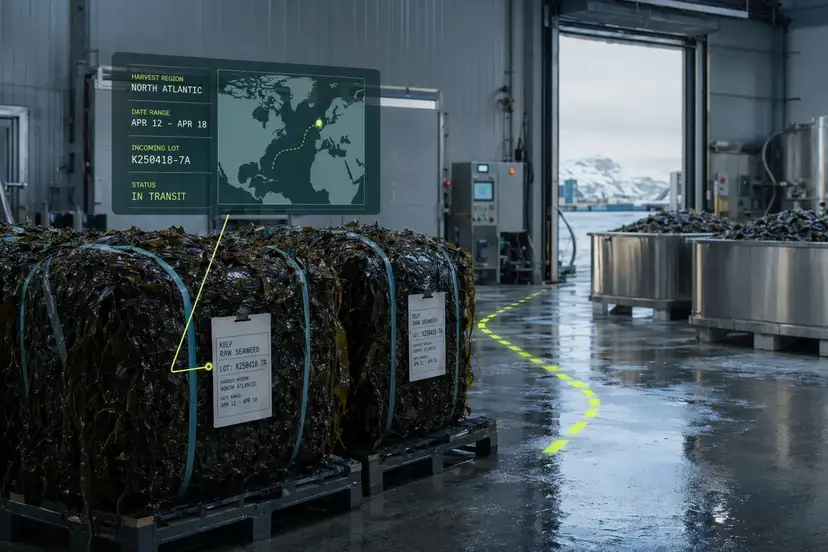
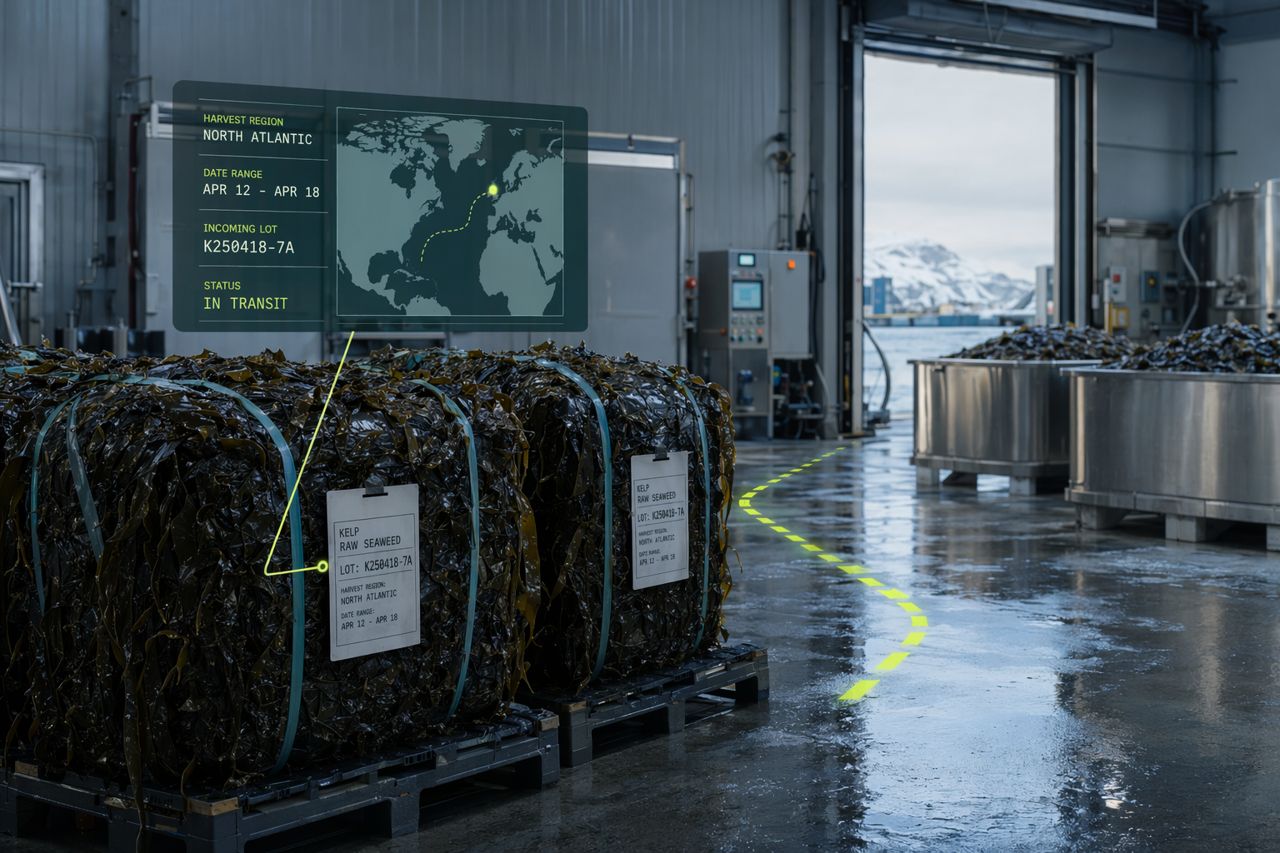
- date range of harvest
- primary collector, farm operator, or aggregation point
- first processing location
- transport route into drying, milling, or extraction
This information helps buyers compare lots, identify recurring variability, and build supplier scorecards around actual performance rather than broad geography.
Harvest method affects process behavior
Wild-harvested, beach-cast, and farmed seaweed can each have a place in industrial supply. The key is not to assume equivalence.
Wild harvest
Wild harvest may provide established species access and seasonal volume, but it requires tight records around location, cutting practices, bycatch, foreign matter, and post-harvest handling. Buyers should ask how harvesters avoid excessive hold time, soil contact, diesel contamination, and mixed-species loads.
Farmed seaweed
Farmed seaweed can offer more consistent site history and scheduled harvest windows. Buyers should still verify line materials, growing depth, biofouling control, harvest maturity, and rinse practices. Consistency improves when the farm, harvest crew, and first processor follow repeatable standards.
Beach-cast material
Beach-cast seaweed usually carries higher uncertainty. It can include sand, shell, mixed species, decomposition risk, and uncontrolled exposure. If used, it needs stricter segregation, documentation, and acceptance criteria.
Documentation that supports buyer confidence
A traceable supply chain should create a clean document trail from harvest to finished ingredient lot. The goal is not document volume. The goal is decision-quality information.
Ingredient buyers should look for:
- supplier approval records
- species declaration and verification process
- harvest location and harvest date range
- harvest method declaration
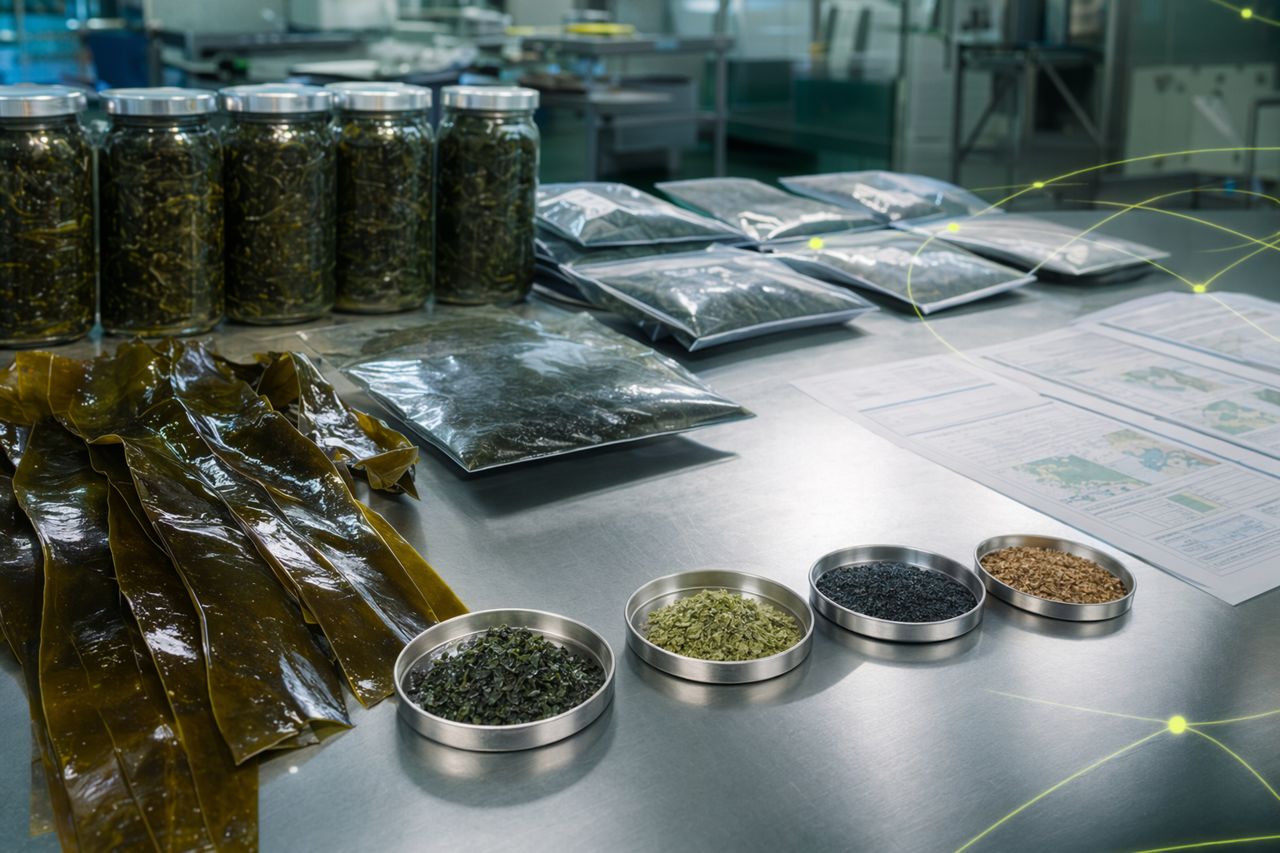
- drying or preservation method
- moisture and storage condition records
- transport and receiving logs
- contaminant screening records appropriate to the market
- lot coding that links raw material to finished ingredient
- change-control notices for source, method, or site changes
- certificate of analysis aligned to purchase specification
A useful certificate does more than state that a lot passed. It should connect back to a controlled lot identity and be consistent with the buyer’s specification, risk profile, and intended industrial use.
Contaminant risk: manage the exposure path
Seaweed can concentrate elements and materials from the marine environment. Risk management depends on species, location, season, and processing route.
Common areas of buyer review include:
- inorganic arsenic and other relevant heavy metals
- iodine level where specification control is required
- sand, shell, grit, and insoluble foreign matter
- marine debris and plastic fragments
- fuel, lubricant, or vessel-related contamination risk
- microbiological load from handling and drying conditions
- moisture abuse during storage or ocean freight
- allergens or cross-contact risks from shared facilities
No single document removes risk. Buyers need a system: supplier qualification, source mapping, lot testing where appropriate, receiving checks, and documented escalation when results move toward action limits.
Lot traceability inside the processing plant
Traceability often weakens at the point where raw seaweed lots are blended, hydrated, extracted, screened, concentrated, or dried. For ingredient buyers, this is where the paper trail must connect to actual material flow.
Strong plant-floor traceability links:
- incoming raw seaweed lot codes
- storage bin, bale, bag, or silo identity
- pre-processing steps such as washing, cutting, milling, or hydration
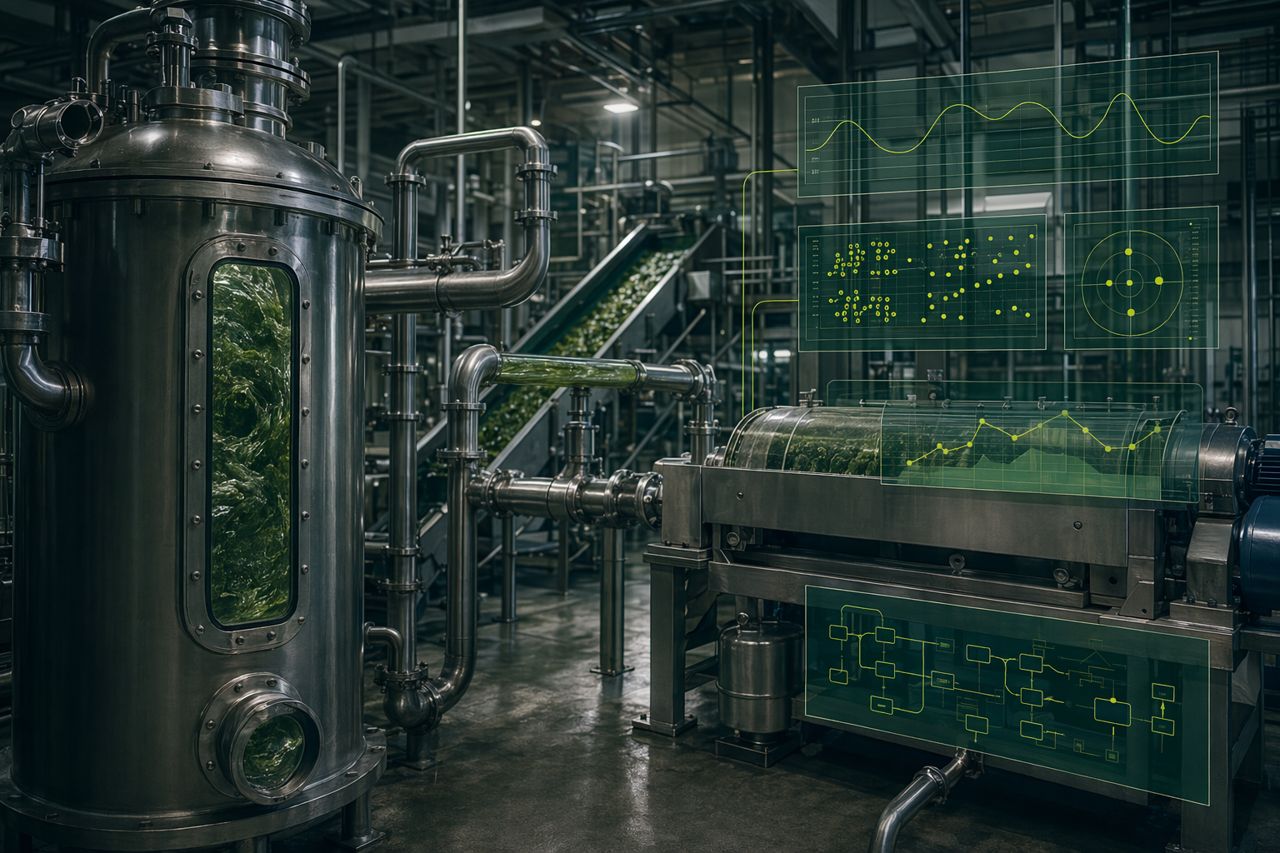
- extraction vessel and batch number
- enzyme addition record where enzymatic processing is used
- hold conditions and process timing
- screen, decanter, centrifuge, or filtration stage records
- intermediate tank numbers
- finished ingredient lot codes
- retained samples and release documentation
The practical question is simple: if a finished ingredient lot has a quality issue, can the plant identify the source material, processing path, affected volume, and adjacent lots quickly enough to protect customers?
How traceability improves enzymatic processing decisions
Enzyme-assisted seaweed processing performs best when raw material variability is visible. Origin, species, harvest maturity, drying history, and storage condition all influence how the material hydrates, releases soluble fractions, builds viscosity, and separates.
Better traceability helps extraction managers:
- select process windows before a batch enters the vessel
- adjust hydrolysis strategy for raw material condition
- anticipate viscosity load on pumps, screens, and heat exchangers
- protect centrifuge and filtration performance
- reduce off-spec extract variation
- investigate yield shifts without guessing
- separate supplier variation from plant operating variation
This is where traceability becomes commercial. It supports fewer surprises, more stable throughput, and stronger finished-ingredient confidence.
Buyer questions that reveal supply-chain maturity
Use these questions in supplier reviews, audits, and annual performance discussions:
- Can each finished lot be traced back to harvest region, harvest date range, and first processing site?
- Are wild, farmed, and beach-cast materials segregated through receiving and storage?
- What criteria are used to accept or reject raw seaweed before processing?
- How are species identity and mixed-load risks controlled?
- What contaminants are monitored based on origin, species, and market requirements?
- How are high-moisture or delayed-drying lots identified?
- What happens when a source area, harvest method, dryer, or aggregation partner changes?
- How are blended raw lots represented in finished lot documentation?
- Can the plant perform a mock trace within a defined response window?
- Are process deviations connected back to raw material history?
The strongest suppliers answer with records, not general assurances.
Red flags for ingredient buyers
A traceability program needs scrutiny when you see:
- broad origin claims with no harvest-area detail
- inconsistent species names across documents
- missing harvest dates or long unexplained harvest windows
- unexplained blending before lot creation
- certificates that do not match purchase specifications
- repeated moisture, odor, color, grit, or viscosity variation
- no formal notification when source or drying method changes
- inability to connect finished lots to incoming raw material lots
- slow response during complaint or recall simulation
One red flag does not always disqualify a supplier. Several red flags indicate higher commercial risk and weaker process predictability.
What good looks like
A dependable seaweed supply chain is visible, segmented, and responsive. It does not rely on perfect raw material. It relies on knowing what material is coming in, how it was handled, how it behaved in processing, and how that history connects to the released ingredient.
For buyers, the payoff is practical:
- more confidence in supplier qualification
- fewer unexpected changes in ingredient behavior
- faster root-cause analysis
- stronger documentation for customer audits
- improved alignment between raw material sourcing and plant process control
- more consistent ingredient specifications
Traceability is not separate from production economics. It helps protect throughput, separation performance, and finished-lot reliability.
Build traceability into your processing conversation
If your plant is using enzymes to improve seaweed extraction, viscosity control, soluble fraction release, or separation efficiency, raw material traceability should be part of the technical discussion. The more clearly a lot is defined, the easier it is to build a controllable process around it.
Thalrix supports seaweed processors with commercially practical enzyme solutions designed for plant-floor realities: variable biomass, demanding separation steps, and ingredient specifications that need to hold lot after lot.
Planning a seaweed extraction or process improvement project? Use the on-site request form to share your raw material type, process goal, and target ingredient format. Our team will help evaluate the right enzyme approach for your plant.
Request a quote