Why Seaweed Raw-Material Variation Changes Extraction Yield
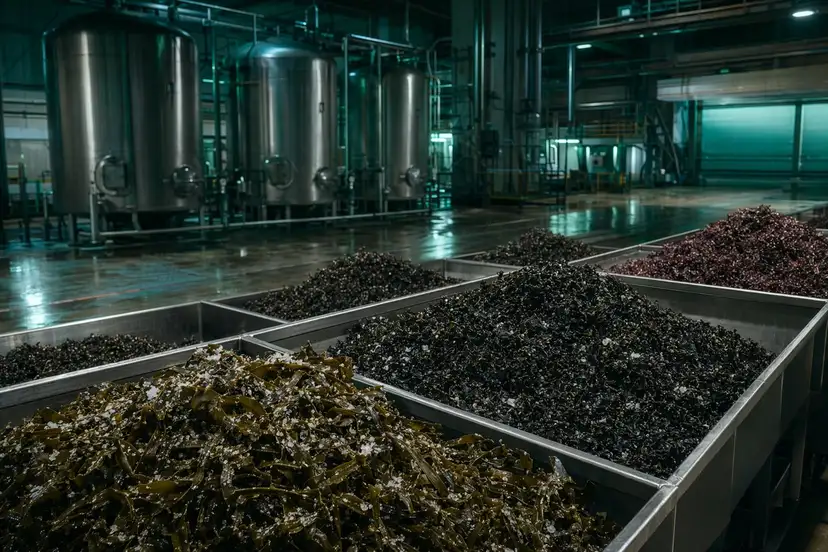
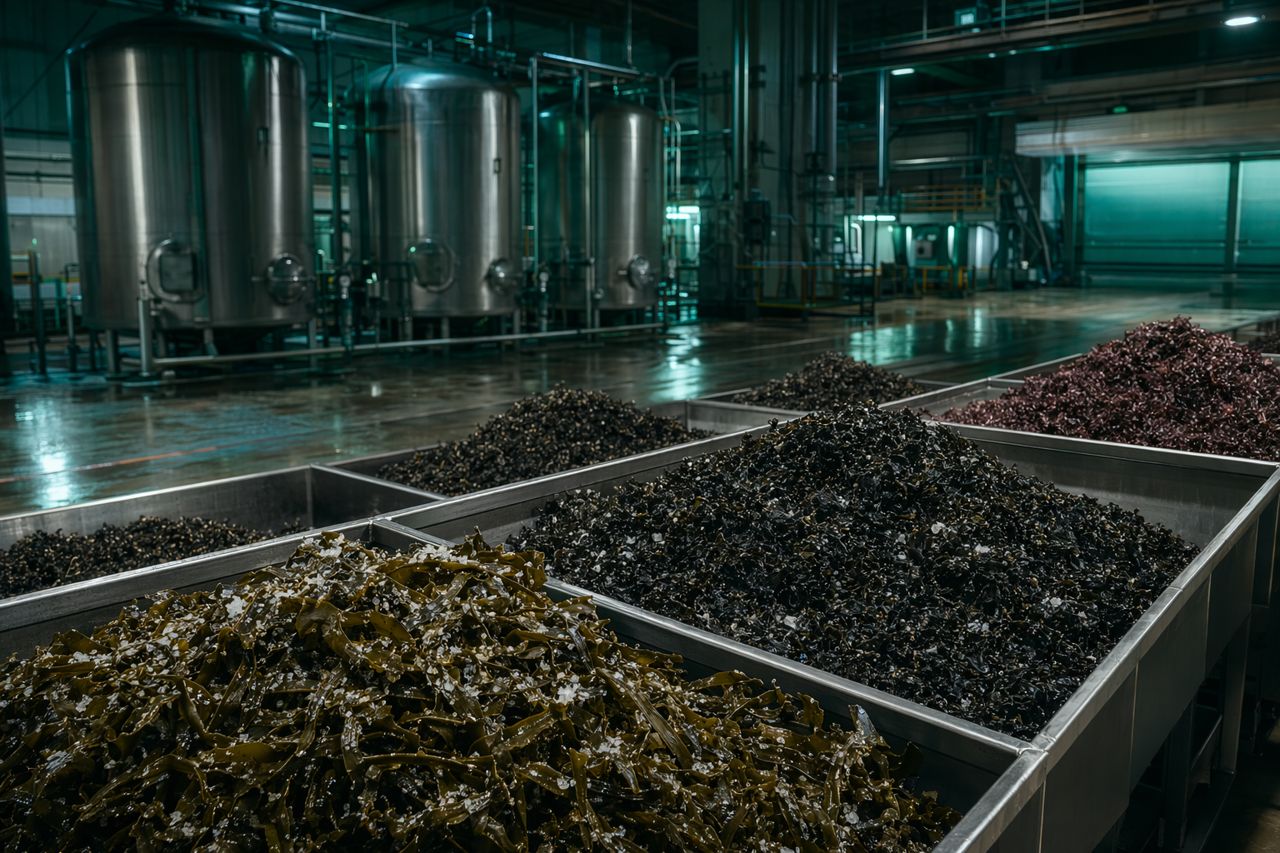
In seaweed processing, extraction yield is rarely controlled by the extractor alone. By the time kelp, red seaweed or mixed macroalgae reaches the hydration tank, much of the yield potential has already been set by biology, harvest timing, drying conditions, salt load, cut size and storage history.
For agar, carrageenan and seaweed extract plants, this variation shows up on the floor as slower hydration, heavier viscosity, weak separation, higher solids carryover, inconsistent liquor clarity and more batch-to-batch correction. The commercial impact is direct: lower recoverable solids, longer cycle time, wider specification drift and more operator intervention.
Thalrix works with processors that need a practical enzyme supplier for seaweed processing—one that understands raw material variability, extraction behavior and the plant realities between incoming bales and finished ingredient specification.
Yield starts with the incoming raw material
Two lots may look similar at receiving, but behave very differently once they enter hot water, alkali treatment, enzymatic conditioning or extraction. The reasons are usually layered, not isolated.
Key drivers include:
- Species and harvest location — different seaweed types carry different polymer structures, mineral loads and cell-wall resistance.
- Seasonal maturity — younger and older biomass can release soluble fractions at different rates and create different viscosity profiles.
- Drying method — sun drying, hot-air drying and uneven field drying can change hydration speed, brittleness and extractability.
- Particle size distribution — fines, oversized pieces and uneven milling affect wet-out, heat transfer and residence time.
- Salt and mineral load — retained brine and surface salts can interfere with hydration, dilution balance and downstream separation.
- Storage history — humidity, compression, microbial exposure and long dwell times can alter material behavior before processing begins.
When these variables are not segmented or compensated, the extractor becomes a correction tool rather than a controlled production asset.
Season and maturity change the extraction window
Seaweed is not a uniform industrial feedstock. It is a marine crop. Seasonal changes affect polymer accessibility, tissue toughness, ash content and the ratio between soluble and insoluble fractions.
In agar and carrageenan plants, seasonal feedstock can shift gel-related performance, liquor viscosity and filtration load. In extract plants, maturity can change how readily internal soluble fractions move into the process liquor. A batch that extracts cleanly in one season may require longer hydration, adjusted temperature staging or different conditioning in another.
The production risk is not just lower yield. It is an unstable extraction window. Operators may chase performance with time, heat, dilution or chemical adjustment, but each correction can create cost elsewhere.
Species and mixed lots create uneven breakdown
Many plants process seaweed lots that are described by origin or commercial grade, not by a narrow biological profile. Within one lot, there may be variation in blade thickness, stem content, maturity and mineral burden. Mixed species or mixed harvest zones can increase that spread.
This matters because targeted hydrolysis depends on substrate access. If some material opens quickly while tougher fractions remain locked, the plant may see both over-processed fines and under-extracted coarse solids in the same batch.
That creates familiar symptoms:
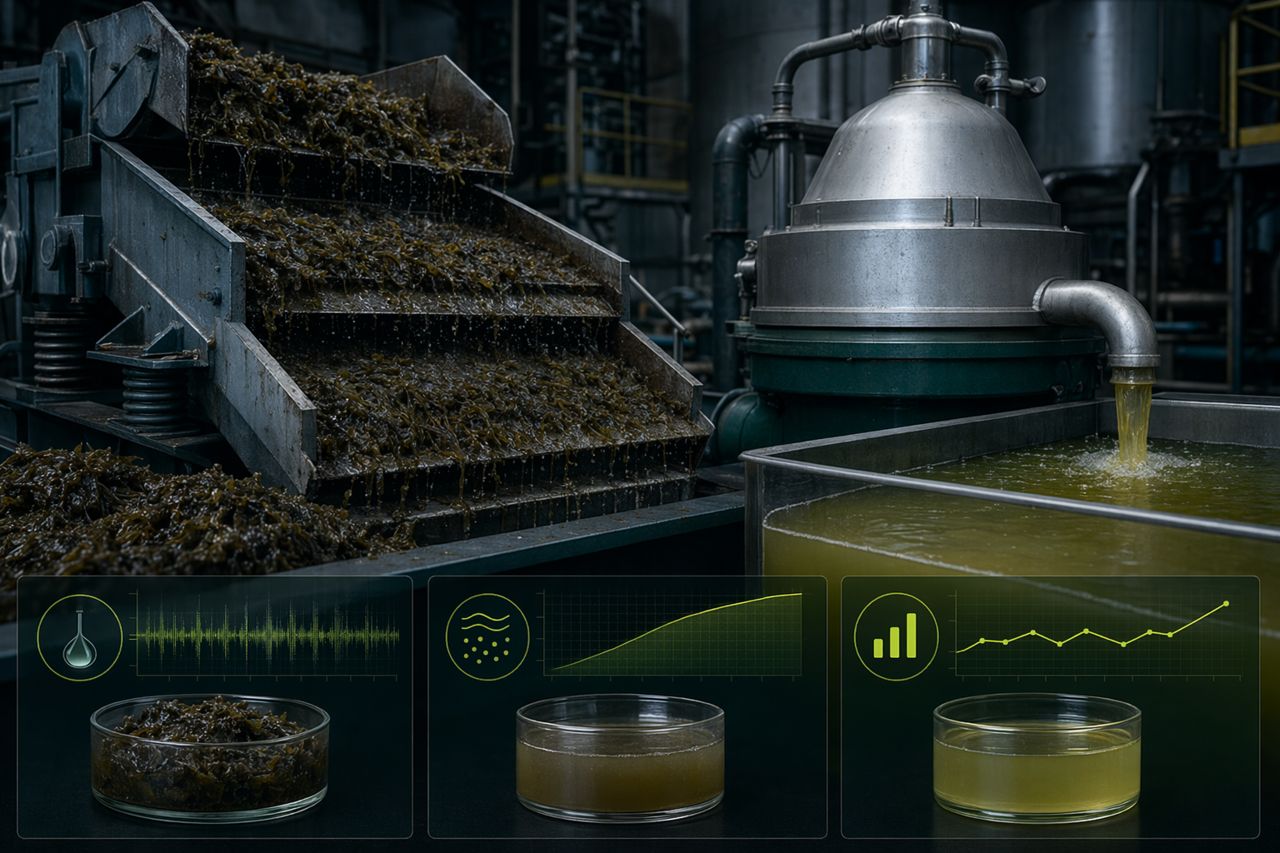
- fast viscosity rise followed by poor liquor release;
- screens blinding earlier than expected;
- centrifuges carrying more insoluble material;
- extract strength moving outside the expected range;
- higher water use to maintain pumpability.
The better response is not maximum breakdown. It is controlled opening of the biomass so release, viscosity and separation stay aligned.
Drying method affects hydration and cell opening
Drying is one of the biggest hidden variables in seaweed extraction. Uneven drying can harden exterior tissue while leaving internal moisture pockets. Aggressive drying can make material brittle, increasing fines. Slow or humid drying can encourage quality drift before the raw material enters storage.
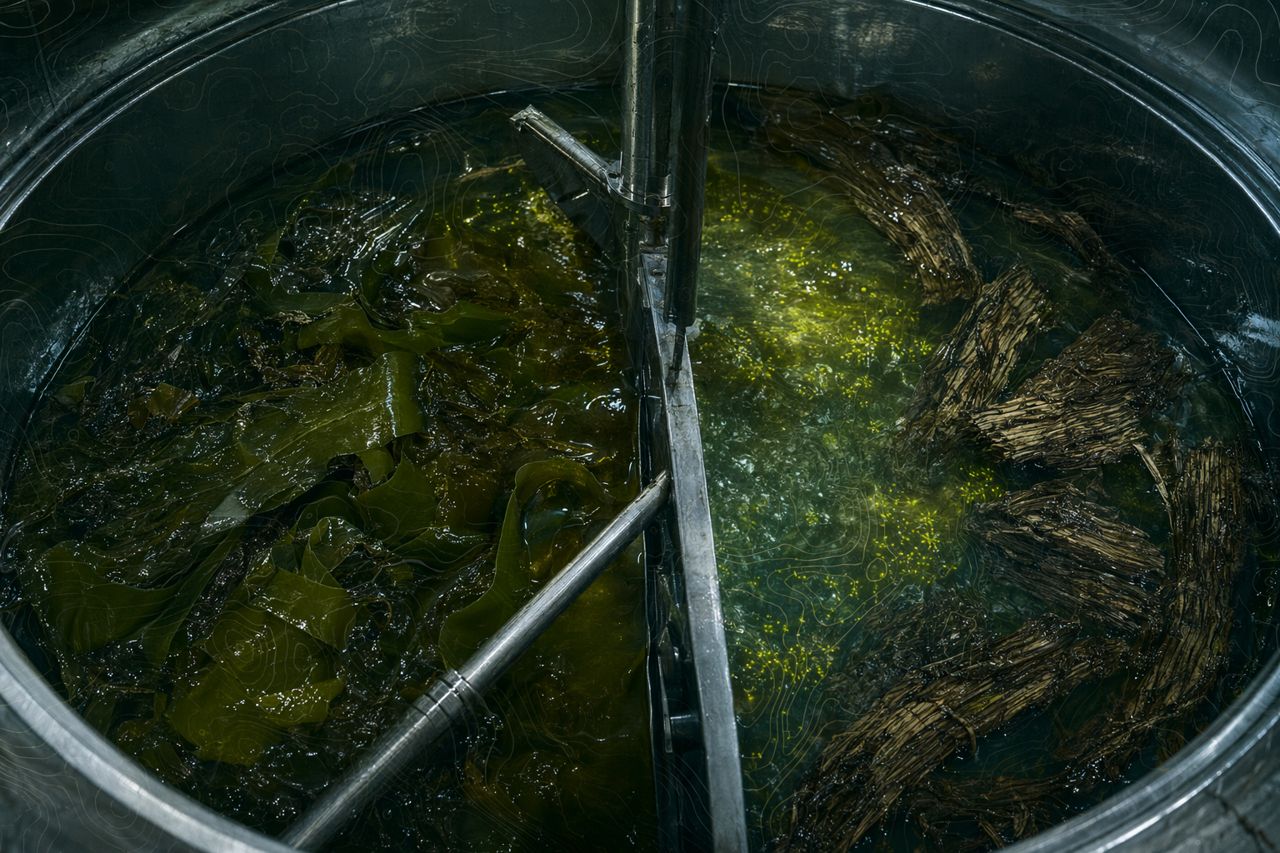
On the plant floor, drying history affects how seaweed wets out, how quickly it softens and how evenly it releases extractable fractions. Poor hydration creates islands of under-processed material. Excess fines create viscosity and solids-handling problems.
For processors, the practical move is to treat drying history as a process input, not a supplier footnote. Lots with different drying profiles may need different soak times, prewash intensity, cut-size handling or enzyme-conditioning windows.
Particle size controls contact, heat transfer and solids handling
Particle size is often treated as a mechanical preparation detail. In extraction, it is a yield and separation variable.
Oversized pieces can hydrate slowly and release incompletely. Excess fines can overload screens, raise slurry viscosity and increase solids carryover into clarification. A wide particle-size distribution can force operators to choose between under-extracting the coarse fraction or over-shearing the fine fraction.
More uniform preparation gives enzymes, water and heat a more predictable contact surface. It also reduces the gap between lab expectation and full-scale tank behavior.
Salt load changes dilution balance and separation behavior
Seaweed carries the sea with it. Surface salt, trapped brine and mineral load can vary widely between harvest sites and handling methods.
High salt load can change hydration behavior, increase dilution demand and shift the ionic environment of the extraction liquor. For carrageenan and agar operations, mineral balance can influence process behavior and downstream product consistency. For extract plants, salt variation can complicate concentration targets and specification control.
Prewash strategy matters, but over-washing can also remove desirable soluble material. The best approach is controlled salt reduction with clear yield accounting, not simply more water.
Storage can turn a good lot into a difficult lot
Even well-harvested material can become inconsistent in storage. Humidity pickup, compression, temperature swings and extended dwell time can alter wet-out and make bales behave differently within the same purchase.
Warning signs include:
- uneven bale odor or discoloration;
- hard compressed zones that resist hydration;
- high fines after handling;
- variable moisture between pallets;
- unexpected viscosity rise during extraction.
Storage discipline improves extraction consistency. Plants that track lot age, moisture exposure and pallet-level variation have a better chance of predicting yield before the batch is committed.
Where enzyme strategy fits
Enzymes cannot erase poor raw-material control. They can, however, help processors manage natural variation with more controllable hydrolysis.
In seaweed extraction, an enzyme program may be used to:
- open targeted cell-wall structures before or during extraction;
- reduce viscosity enough to improve pumping and heat transfer;
- support cleaner liquor release from hydrated solids;
- improve screen and centrifuge performance;
- reduce over-processing caused by extended time or harsh correction;
- help keep ingredient specifications more consistent across variable lots.
The objective is not aggressive digestion. It is a controlled process effect: enough substrate breakdown to release value, without creating separation problems or specification drift.
Practical controls for extraction managers
Plants that manage raw-material variation well usually combine receiving discipline with process flexibility.
Useful controls include:
- Lot segmentation by species, origin, harvest season, drying method and storage age.
- Moisture and salt screening before the material reaches the extraction line.
- Particle-size monitoring after cutting, milling or bale breaking.
- Hydration observation during initial wet-out, not only at final extraction.
- Viscosity trend tracking through the extraction curve.
- Solids behavior review at screens, decanters and centrifuges.
- Yield accounting by raw-material class, not only by finished production day.
- Enzyme-condition adjustment based on feedstock behavior, residence time and separation goals.
This turns variability into a managed input rather than a recurring batch surprise.
What to share when requesting enzyme support
For a useful technical discussion, prepare plant-level information rather than only a product name. Thalrix can evaluate the extraction challenge faster when the request includes:
- seaweed species or commercial grade;
- target ingredient type, such as agar, carrageenan or seaweed extract;
- current hydration and extraction sequence;
- typical viscosity or pumping limitation;
- separation equipment used after extraction;
- raw-material drying and storage conditions;
- yield variation range between good and difficult lots;
- finished specification constraints.
With that context, enzyme selection can be tied to throughput, liquor release, viscosity control and solids handling—not generic lab claims.
The commercial point
Raw-material variation is unavoidable in seaweed processing. Yield loss is not always unavoidable.
When plants understand how season, species, drying, particle size, salt load and storage affect extraction behavior, they can build a tighter operating window. When that window is supported by precise enzyme-assisted conditioning, processors can improve controllability without pushing the line into separation trouble.
Thalrix helps seaweed processors connect raw-material reality to practical enzyme programs for extraction performance.
Need to stabilize yield across variable seaweed lots? Use the on-site request a quote form to share your process conditions and start a technical review with Thalrix.