HACCP and Contamination Control in Seaweed Processing Plants
Seaweed processing plants handle a raw material that arrives with the tide still attached: sand, shell fragments, stones, ropes, epiphytes, brine, variable microbial load, and seasonal biomass differences. For extraction managers, the control question is practical: how do you keep the line moving while protecting product specifications, separation performance, and downstream customer confidence?
A strong HACCP program in marine biomass processing is not paperwork around the plant. It is a plant-floor system for keeping hazards visible, measurable, and under control from reception through washing, size reduction, extraction, clarification, concentration, drying, and packing.
For Thalrix customers, contamination control also connects directly to process efficiency. Cleaner incoming biomass, tighter sanitation, and better separation discipline support more predictable hydrolysis, lower viscosity surprises, improved solids handling, and more consistent ingredient outputs.
Why seaweed processing needs a marine-specific HACCP view
Seaweed is not a clean, uniform crop. It is harvested from a dynamic coastal environment and may carry physical, biological, and chemical variability into the factory. A generic food-plant HACCP template rarely captures the practical risks of wet marine biomass.
Key characteristics that affect hazard control include:
- High moisture load and rapid microbial change after harvest
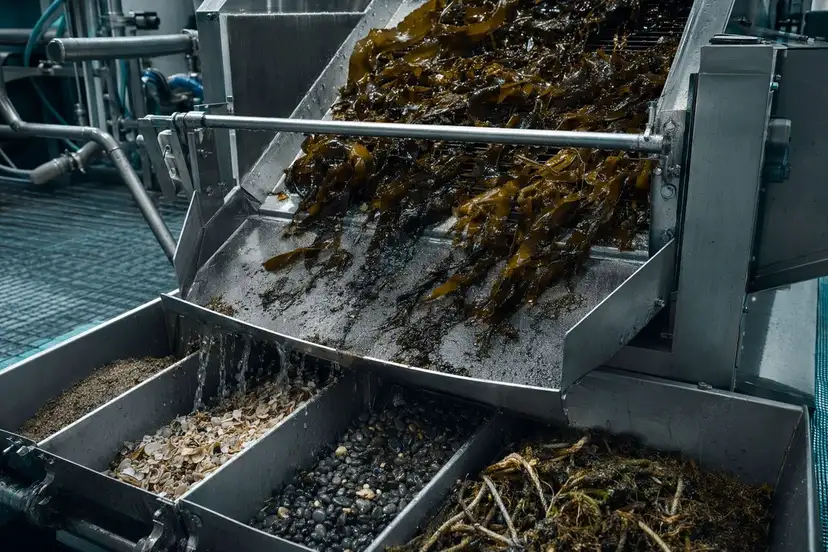
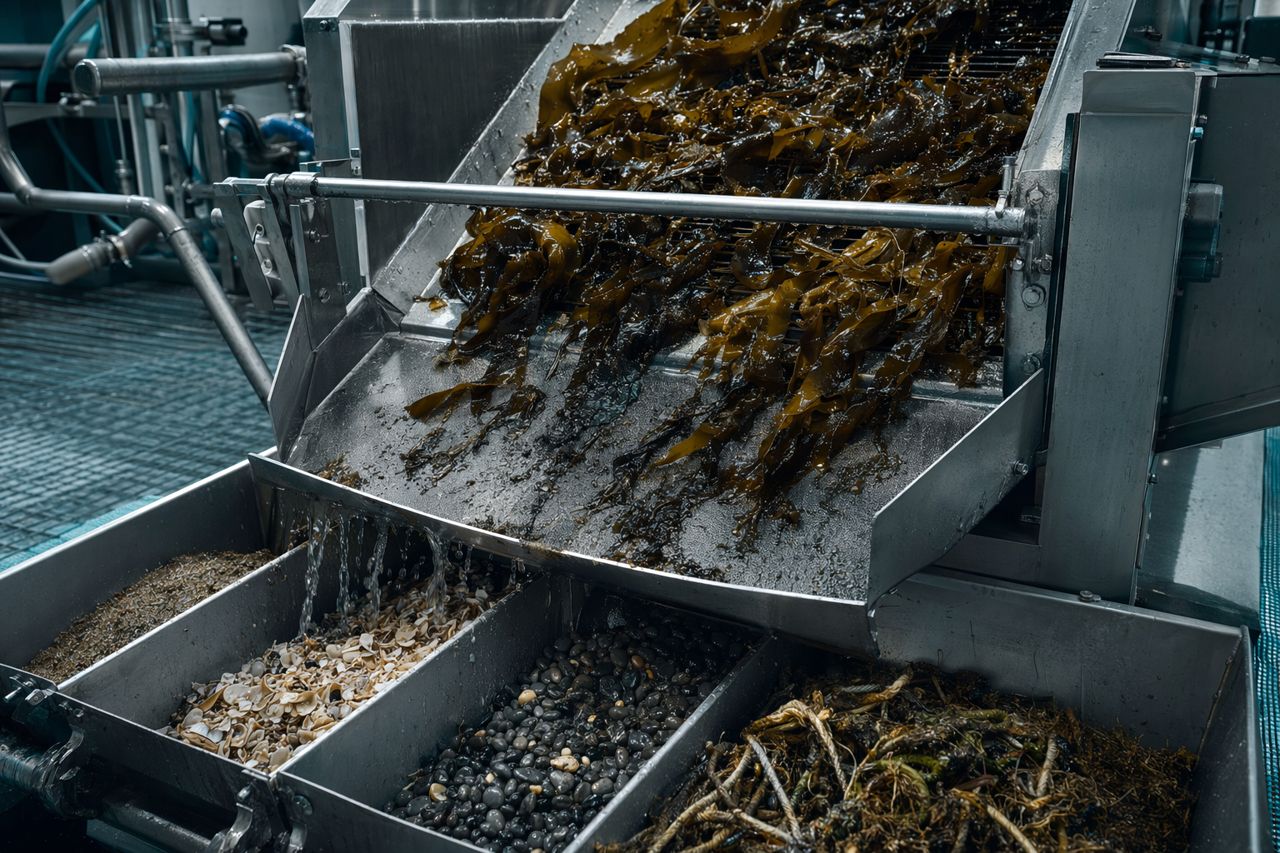
- Entrained sand, silt, shells, small stones, and marine debris
- Variable salt content and surface biofilm
- Seasonal shifts in tissue strength, pigment, polysaccharide profile, and viscosity behavior
- Handling through wet conveyors, flumes, washers, screens, tanks, pumps, and centrifuges
- Risk of cross-contact between raw biomass zones and cleaned or extracted streams
The result is a process that must control contamination without slowing throughput. The best plants design HACCP, sanitation, and process aids as one operating system.
Main hazard categories in seaweed factories
1. Foreign matter: sand, shells, stones, rope, plastic, and metal
Foreign matter is often the most visible risk in seaweed processing. It can damage equipment, reduce ingredient quality, overload screens, and create customer complaints.
Common sources include:
- Sand and grit trapped in holdfasts and folds
- Shell fragments and small stones from harvest areas
- Rope fibers, netting, cable ties, and plastic from harvest handling
- Metal fragments from worn cutting, conveying, or pumping equipment
- Packaging debris from bins, totes, or temporary storage
Control points typically include raw material inspection, controlled unloading, pre-rinse, washing, stone traps, screens, magnets where appropriate, and routine equipment checks. In practical terms, the goal is to remove heavy and sharp material before it reaches cutters, pumps, extraction vessels, and separation stages.
2. Microbial load and wet biomass dwell time
Fresh seaweed is biologically active. Once harvested, temperature, holding time, surface moisture, and physical damage all influence microbial growth.
Controls should focus on:
- Shortening time between harvest, reception, washing, and processing
- Segregating lots by age, source, and condition
- Managing chilled or shaded holding where feasible
- Avoiding stagnant wet biomass in bins, drains, conveyors, and hoppers
- Validating wash-water quality and turnover
- Cleaning high-contact surfaces before residue becomes established biofilm
For extraction operations, microbial control is also a consistency issue. High and variable microbial burden can alter odor, color, process stability, and customer specification performance.
3. Cross-contamination between raw and cleaned zones
Seaweed plants often operate with high water movement and open transfer points. That makes zoning essential.
Risk areas include:
- Shared tools between raw receiving and post-wash zones
- Personnel moving across wet areas without boot or hand controls
- Forklifts crossing from raw storage to finished ingredient areas
- Drain backflow or splash near cleaned biomass streams
- Rework loops that are not clearly controlled
- Maintenance activity during production without contamination barriers
A good zoning plan is visible from the floor. Color-coded tools, controlled traffic, dedicated hoses, hygienic drain design, and clear raw-to-clean flow reduce avoidable contamination and simplify audits.
4. Chemical residues and water quality
Chemical hazards in seaweed processing may include cleaning residues, lubricant contamination, harvest-area pollutants, or poor water management. Marine biomass can also vary by location, so supplier approval and intake checks matter.
Controls may include:
- Approved harvest zones and supplier documentation
- Defined cleaning chemical concentrations and rinse verification
- Food-contact lubricant control
- Potable or fit-for-purpose water standards
- Conductivity, turbidity, and visual checks in wash and process water
- Preventive maintenance to reduce leaks and equipment wear
Chemical control must be operationally simple. If the line team cannot verify it quickly, the program will not hold under production pressure.
HACCP mapping across a seaweed processing line
Raw material reception
Reception is where many contamination problems are either prevented or accepted into the plant. Intake teams should evaluate lot identity, harvest area, visual condition, temperature exposure, foreign matter load, odor, and time since harvest.
Practical controls:
- Lot coding at unloading
- Visual grading by trained personnel
- Rejection or diversion criteria for heavy contamination
- Separate staging for high-sand or damaged biomass
- Intake records tied to downstream yield and quality data
When reception data is connected to extraction outcomes, managers can identify which harvest sources cause high solids load, viscosity swings, poor separation, or specification drift.
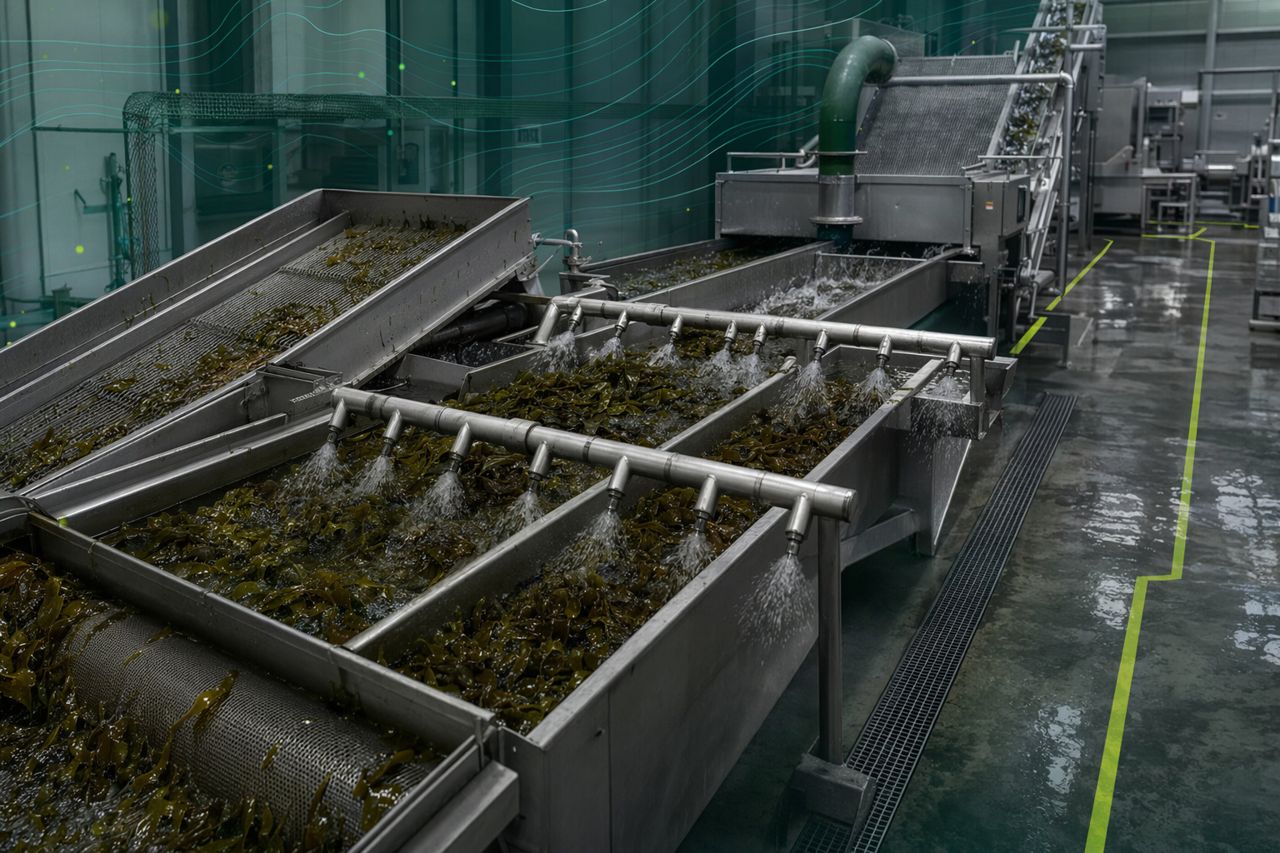
Washing and de-gritting
Washing is more than a cosmetic step. It protects equipment, lowers mineral and grit load, improves downstream separation, and reduces microbial and physical contamination pressure.
Controls to consider:
- Counter-current washing where practical
- Controlled water flow and turnover
- Settling zones or grit removal
- Screen selection matched to species and cut size
- Verification of residual sand and shell load
- Clean-in-place or clean-out-of-place routines for wash systems
Overwashing can increase water use and damage biomass. Underwashing pushes contamination downstream. The target is repeatable removal without unnecessary tissue breakdown before the intended extraction step.
Cutting, milling, and maceration
Size reduction improves mass transfer but can also spread contamination if upstream controls are weak. Worn blades, overloaded mills, and poorly cleaned hoppers can create both physical and microbiological risks.
Controls include:
- Pre-operation inspection of blades, screens, and fasteners
- Foreign matter removal before cutting
- Defined clean-down intervals
- Magnet or metal control where equipment design supports it
- Monitoring of particle size consistency
Consistent size reduction supports more controllable hydrolysis, more predictable viscosity development, and better tank-to-tank repeatability.
Extraction and hydrolysis
Extraction vessels are high-value control points. Here, plant conditions, biomass condition, water ratio, mixing, temperature profile, and enzyme strategy all influence viscosity, release of soluble fractions, and separation performance.
For plants using enzyme-enabled processing, contamination control helps the enzyme program work as intended. Excess grit, uncontrolled microbial load, poor wash consistency, or cross-contaminated streams can reduce process predictability and complicate quality decisions.
Operational priorities include:
- Verified vessel cleanliness before charging
- Controlled raw-material input quality
- Consistent mixing and tank loading
- Defined hold times and process windows
- Separation-readiness checks before transfer
- Clear segregation of trial, rework, and production batches
Thalrix supports seaweed processors that want enzyme systems aligned with plant realities: manageable viscosity, cleaner phase separation, better solids handling, and consistent ingredient specifications.
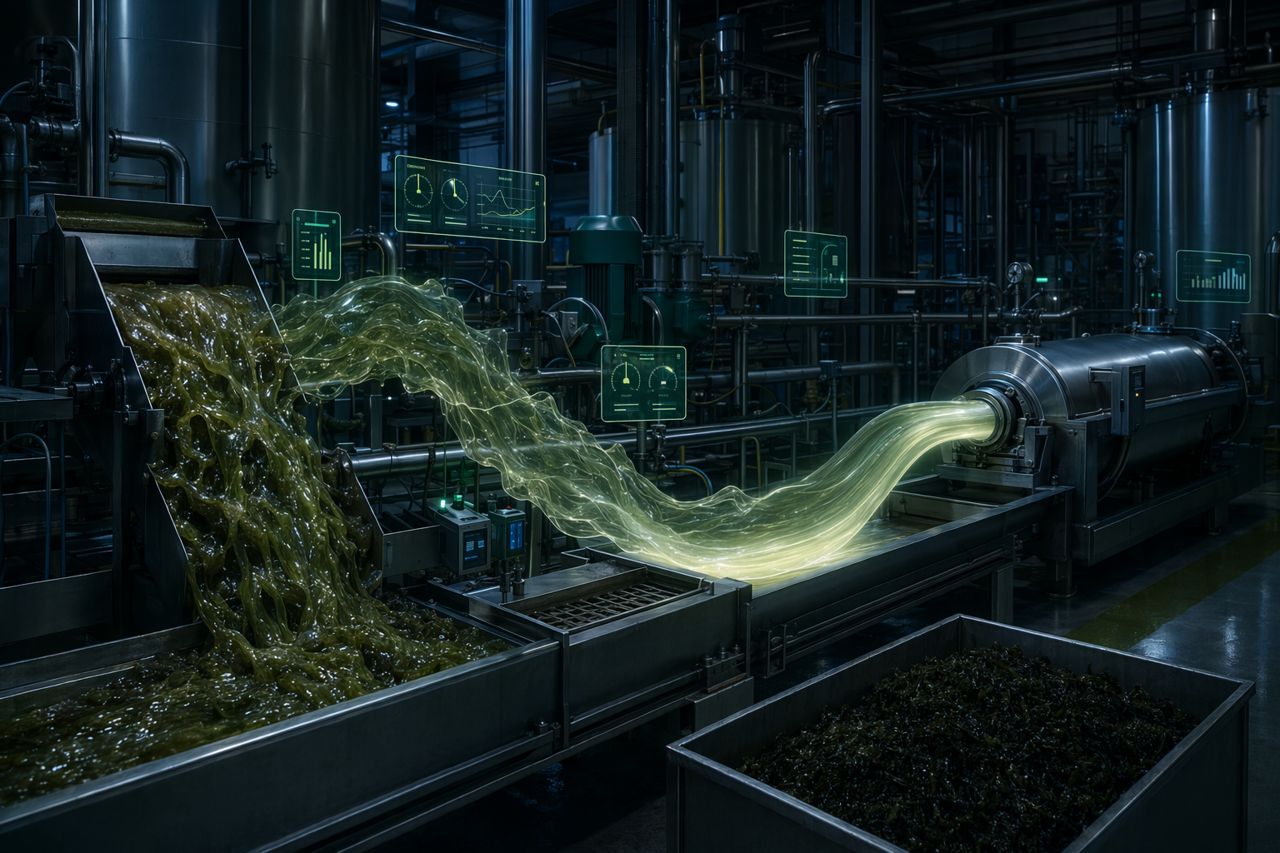
Screening, clarification, and centrifugation
Separation is where upstream contamination becomes obvious. High sand load, shell fines, excessive insoluble solids, and uncontrolled viscosity can reduce throughput and increase operator intervention.
Controls include:
- Screen integrity checks
- Planned screen cleaning to prevent bypass
- Solids load tracking
- Centrifuge feed consistency
- Controlled transfer from extraction tanks
- Monitoring clarity, sediment, and insoluble fraction behavior
A HACCP plan should connect separation deviations back to upstream causes. If centrifuge performance drops, the root issue may be wash quality, particle size, enzyme process control, or poor lot segregation.
Concentration, drying, packing, and storage
Later stages protect the ingredient specification. The contamination focus shifts toward environmental hygiene, air quality, packaging integrity, allergen or cross-contact policies where relevant, and moisture control.
Controls include:
- Hygienic air handling and dust management
- Packaging inspection
- Metal detection or other final product controls where specified
- Drying endpoint control
- Finished product lot traceability
- Warehouse moisture and pest management
The final product should not be asked to compensate for upstream inconsistency. Strong early controls make final release more reliable.
Sanitation that works in wet marine biomass plants
Sanitation in seaweed factories is demanding because residues can be slippery, mineral-rich, and viscous. Dried algal material can adhere to surfaces, while wet residues can support biofilm if left in dead zones.
Effective sanitation programs usually include:
- Dry removal or gross soil removal before water-intensive cleaning
- Defined rinse sequence to move solids out, not deeper into drains
- Detergent selection compatible with marine mineral load
- Mechanical action for belts, screens, valves, and pump housings
- Drain sanitation and standing-water control
- Verification using visual, microbiological, and residue checks appropriate to the plant
- Documented corrective action when sanitation fails
Do not design sanitation only around ideal production days. Design it for heavy harvest days, high-sand lots, staffing changes, and fast turnarounds.
Building a practical HACCP plan for seaweed processing
A useful HACCP plan should help operators make decisions during production. It should identify hazards, preventive controls, monitoring methods, corrective actions, verification routines, and recordkeeping that fit the actual plant layout.
Start with a process flow that matches the floor
Map every step:
- Harvest source approval
- Transport and reception
- Raw holding
- Sorting and inspection
- Washing and de-gritting
- Size reduction
- Extraction or hydrolysis
- Screening
- Clarification or centrifugation
- Concentration or formulation
- Drying or stabilization
- Packing
- Storage and dispatch
Then walk the line during production. Include drain flow, tool movement, rework loops, shared forklifts, personnel traffic, maintenance access, and temporary staging areas.
Define realistic critical limits and operating limits
Critical limits should be reserved for controls that directly prevent, eliminate, or reduce a hazard to an acceptable level. Operating limits can manage quality and process stability before a hazard limit is threatened.
Examples of practical operating limits may relate to:
- Maximum raw biomass holding time
- Wash-water turbidity or turnover target
- Visual foreign matter acceptance threshold
- Screen integrity status
- Sanitation release status
- Segregation of raw and cleaned biomass zones
- Finished product moisture range
Keep limits clear enough for shift teams to apply consistently.
Connect HACCP records to process performance
Seaweed processors gain value when quality records are not isolated from production records. Connect lot source, sand load, wash performance, extraction behavior, viscosity, separation yield, and finished specification results.
This creates a feedback loop for:
- Supplier qualification
- Harvest area risk ranking
- Washing setpoints
- Enzyme process selection
- Solids handling improvements
- Customer specification consistency
For an extraction manager, this is where HACCP becomes commercially useful.
Where enzyme-enabled processing fits
Enzymes do not replace sanitation, washing, or HACCP controls. They work best when the incoming biomass and process environment are controlled. In seaweed extraction, targeted enzyme systems can help processors manage cell wall opening, viscosity behavior, soluble fraction release, and separation readiness.
When paired with strong contamination control, enzyme-enabled processing can support:
- More controllable hydrolysis
- Reduced viscosity where it limits pumping or separation
- Cleaner separation of soluble and insoluble fractions
- Improved solids handling through screens and centrifuges
- More repeatable ingredient specifications
- Less troubleshooting caused by variable raw material quality
As an enzyme supplier for seaweed processing, Thalrix focuses on plant-fit solutions: enzyme programs that make sense in real tanks, real harvest seasons, and real production schedules.
Common contamination-control failure points
Plants that struggle with recurring contamination or specification drift often see issues in predictable places:
- Raw lots accepted without meaningful grading
- Wash systems overloaded during peak harvest
- Tools and hoses shared across hygiene zones
- Screens damaged or bypassed during production pressure
- Dead legs and stagnant areas in wet transfer systems
- Incomplete sanitation around belts, pumps, valves, and drains
- Rework handled without clear rules
- Quality data reviewed after release instead of during production
The fix is rarely one dramatic change. More often, it is a disciplined set of small controls that hold under shift pressure.
Plant-floor checklist for seaweed HACCP readiness
Use this as a practical review before a new harvest season, new product run, or enzyme process optimization project.
- Are harvest sources approved and risk-ranked?
- Is each raw lot traceable from reception through finished product?
- Are sand, shells, stones, rope, plastic, and metal risks mapped by line step?
- Are high-sand lots segregated or treated differently at intake?
- Is wash performance verified during production, not only at startup?
- Are raw and cleaned zones physically and behaviorally separated?
- Are screens, pumps, and cutters inspected for wear and integrity?
- Are extraction vessels released by sanitation status before charging?
- Are viscosity, solids load, and separation behavior tracked by lot?
- Are rework streams controlled and documented?
- Are sanitation failures linked to corrective action and retraining?
- Are process deviations reviewed with production, quality, and maintenance together?
What buyers should expect from a technical enzyme partner
A seaweed processor should expect more than a product recommendation. The right partner should understand wet biomass handling, viscosity constraints, separation equipment, sanitation realities, and specification pressure.
Thalrix works with seaweed processing teams to align enzyme selection with:
- Species and seasonal biomass variability
- Extraction target and ingredient specification
- Tank configuration and mixing limits
- Desired viscosity profile
- Screening and centrifuge performance
- Solids handling and downstream drying needs
- Production schedule and changeover constraints
The commercial goal is straightforward: help the plant convert variable marine biomass into consistent, saleable ingredients with fewer avoidable process losses.
Request a quote for a seaweed processing enzyme program
If your plant is reviewing HACCP controls, contamination pressure, or extraction consistency, Thalrix can help evaluate where an enzyme program may improve controllable hydrolysis, viscosity management, separation, and specification repeatability.
Request a quote through the on-site contact form and include your seaweed species, current process flow, target ingredient, main bottleneck, and production scale. A Thalrix technical contact will follow up with a practical recommendation for your line.