Seaweed Extracts for Agriculture | Thalrix
Industry overview for seaweed extract production in agriculture and biostimulants, with practical enzyme guidance for viscosity, solids, odor, separation, and batch consistency.
Request pricing Industry overview for seaweed extract production in agriculture and biostimulants, with practical enzyme guidance for viscosity, solids, odor, separation, and batch consistency.
Request pricingAgricultural seaweed extracts are no longer a side stream. For many processors, they are a dedicated production category with tighter customer expectations around solubility, sediment, odor, color, viscosity, and repeatable composition.
That puts pressure on the extraction line. Kelp, ascophyllum, and mixed macroalgae all bring variable cell structure, mineral load, seasonal solids, and native viscosity. A batch that looks manageable in the extraction vessel can become slow at the screen, heavy at the centrifuge, difficult to concentrate, or inconsistent at final blending.
Thalrix supports processors as an enzyme supplier for seaweed processing focused on controllable hydrolysis, cleaner separation, and plant-floor practicality.
Buyers of agricultural inputs are looking for materials that fit their formulation and application requirements. Whether the final product is a liquid concentrate, soluble powder, tank-mix ingredient, or intermediate for downstream blending, the production line has to deliver a stable specification.
Common commercial targets include:
Enzymes do not replace good raw material handling, thermal control, or separation design. They help make the biomass behave more predictably inside that system.
Seaweed is not a uniform raw material. Even within the same species, incoming lots can vary by harvest region, maturity, storage time, salt load, sand content, moisture level, and mechanical damage.
For extraction managers, that variability shows up as operating problems:
Agricultural extract production works best when the plant can open the biomass enough to release the desired fractions, without over-processing the batch into a difficult, slimy, high-fines stream.
Enzyme use in seaweed processing is most valuable when it is tied to a specific plant objective. The question is not simply whether the enzyme breaks seaweed down. The question is what the breakdown does to flow, separation, yield, and final specification.
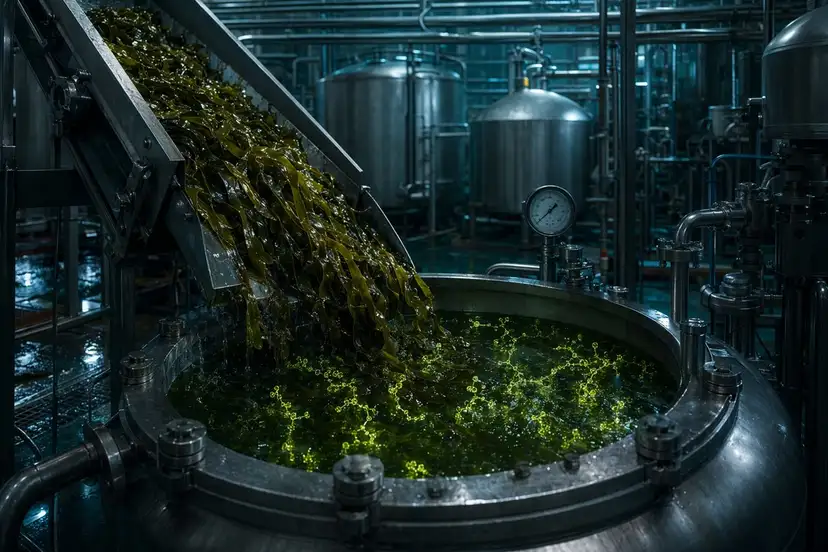
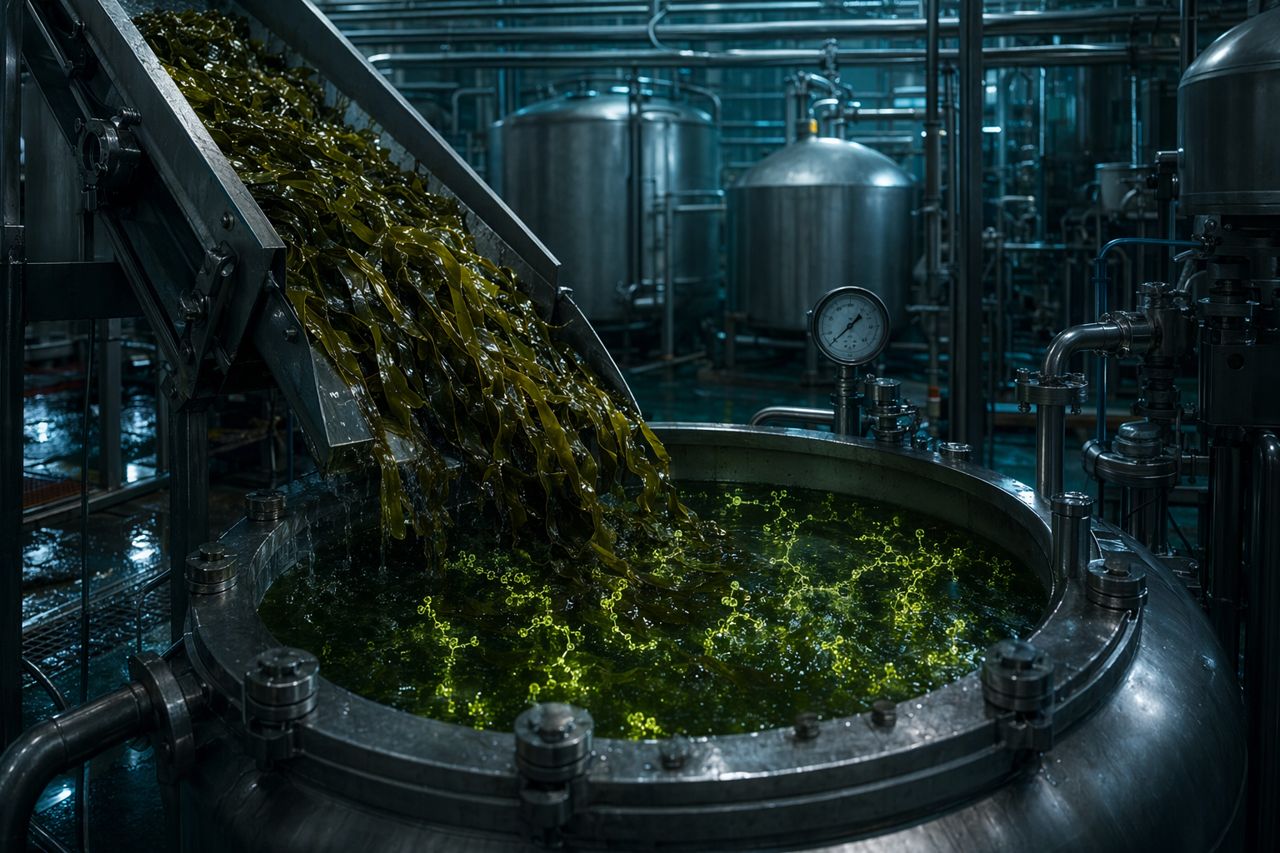
Targeted hydrolysis can help open seaweed cell structures and make soluble components more accessible. For agricultural extract production, this may support better extract strength without pushing the process into excessive heat, long hold times, or harsh conditions.
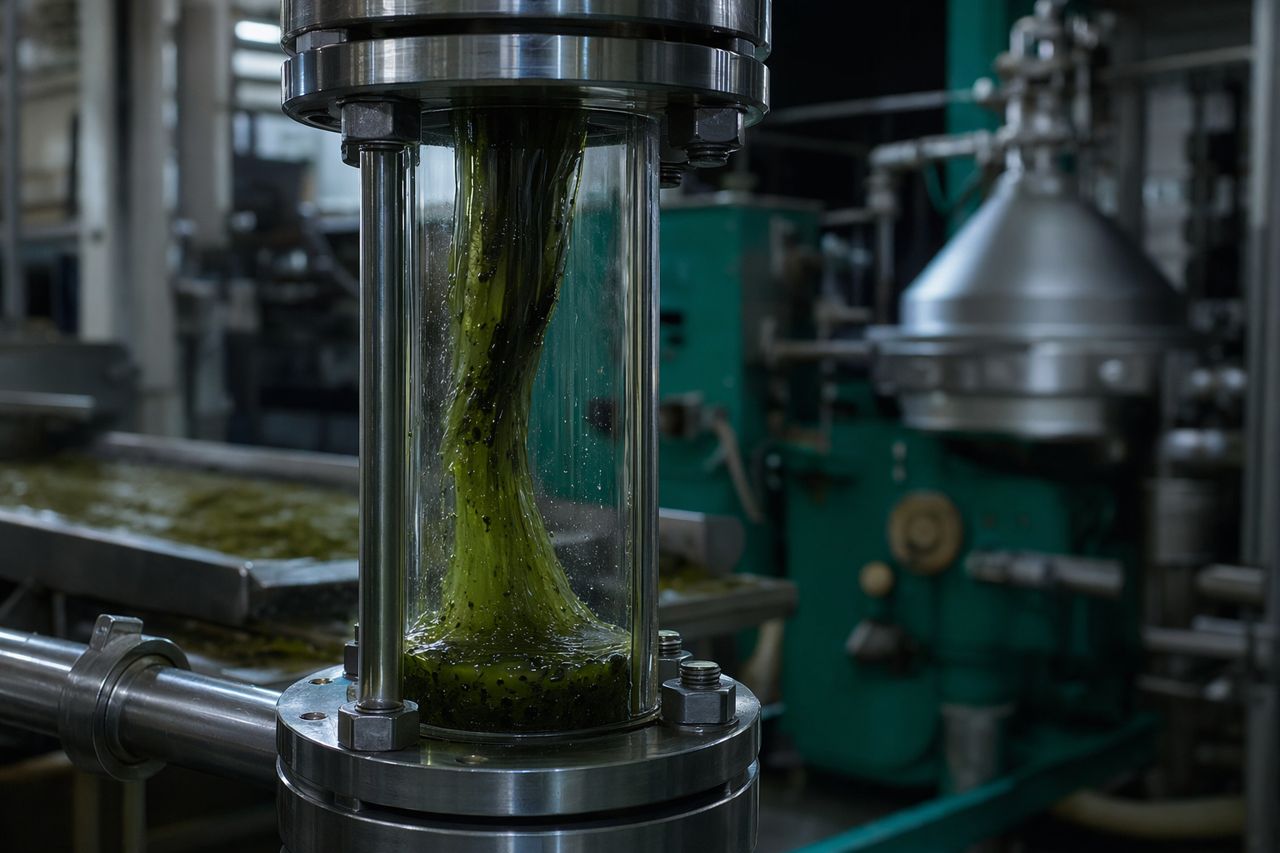
Some seaweed streams develop alginate-like or polysaccharide-driven thickness that challenges pumps, screens, centrifuges, and evaporators. Enzyme selection can be used to adjust the slurry toward a more manageable viscosity window, improving movement through the line.
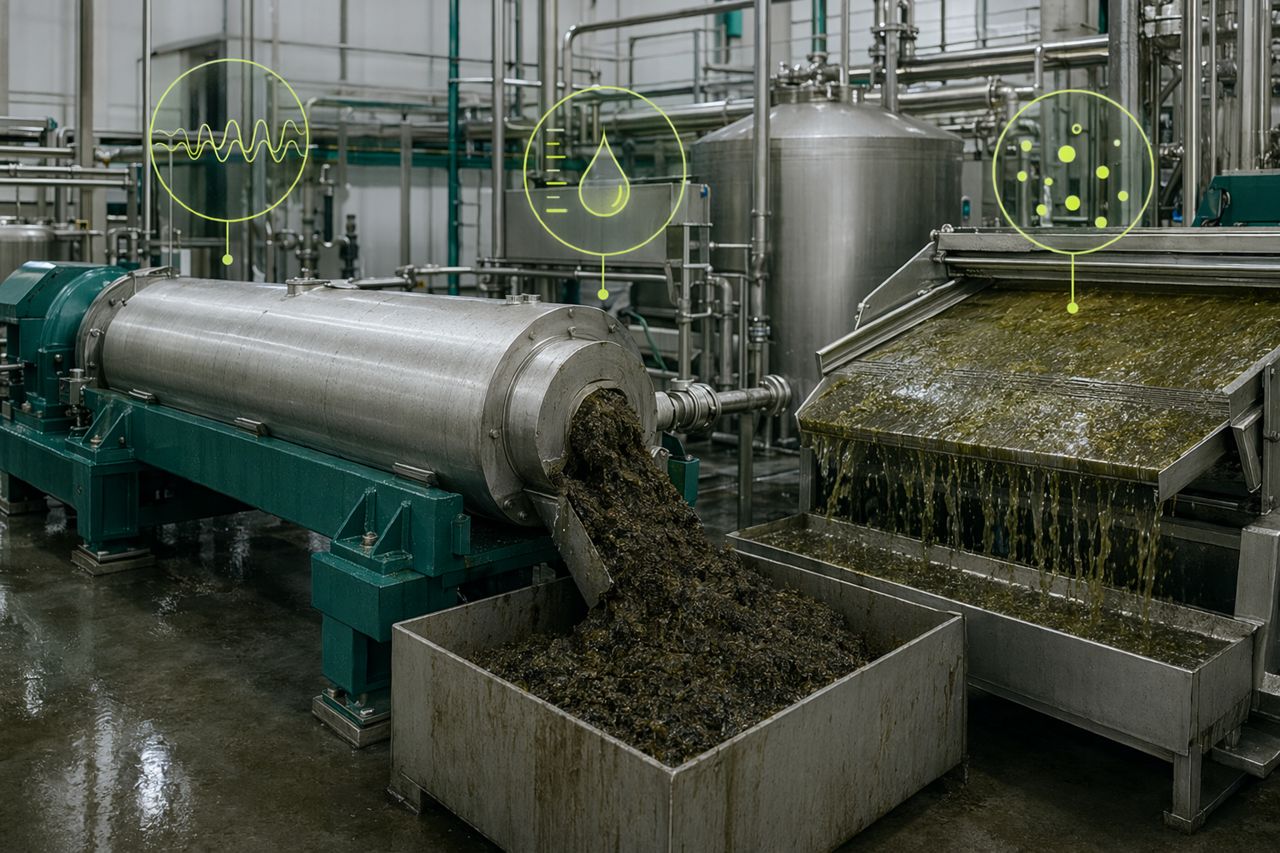
When hydrolysis is controlled, solids may separate more cleanly and carry less trapped liquid. That can reduce wet sludge burden, improve screen performance, and support a cleaner clarified extract.
Seasonal raw material swings will not disappear, but a tuned enzyme step can give the plant another control point. The goal is to reduce the gap between a difficult harvest lot and a standard production target.
Different seaweeds behave differently in extraction. A process built around one raw material may not transfer neatly to another.
Kelp can bring strong viscosity behavior, mineral load, and structural variation depending on cut size and preservation method. Enzyme strategy is often aimed at opening tissue, improving pumpability, and controlling the slurry before separation.
Ascophyllum-based extracts are widely used in agricultural inputs, but the biomass can be tough, variable, and rich in complex structural material. Process control matters because excessive breakdown can create downstream clarification challenges.
Mixed seaweed inputs can be commercially attractive, but they increase variability. Enzymes should be selected around the actual line objective: yield lift, viscosity reduction, clarification, odor control support, or repeatable extract behavior.
A practical enzyme program depends on the operating environment. Thalrix reviews the plant conditions before recommending a fit because small process differences can change the outcome.
Key factors include:
The best result is usually not the most aggressive hydrolysis. It is the level of hydrolysis that gives the plant a controllable batch and a marketable extract.
For a seaweed processing plant, enzyme value has to show up in operating and specification terms.
Useful outcomes may include:
These gains depend on the plant, the raw material, and the target specification. Thalrix focuses on matching the enzyme path to the processing reality instead of forcing a generic solution onto every line.
Odor and color are not only formulation issues. They are process-time issues. Long holds, overloaded solids, poor heat distribution, and delayed separation can push a batch away from the intended profile.
A controlled enzyme step may help shorten the time needed to reach extraction targets or improve separation speed after hydrolysis. That can reduce the amount of time sensitive material sits in the danger zone for odor development or appearance drift.
For processors serving agricultural input brands, this matters. Buyers want ingredients that perform in production and remain consistent in their finished product systems.
A strong enzyme program should define the operating window, not just the ingredient name.
Thalrix typically frames the discussion around practical plant questions:
From there, enzyme selection can be aligned with the real commercial target.
Extraction managers do not need academic over-explanation. They need a route that can be tested against plant metrics.
Thalrix helps evaluate enzyme fit by focusing on:
The right enzyme choice should make the line easier to run, not harder to explain.
It may be time to review enzyme selection if your seaweed extract line is seeing:
A targeted enzyme review can identify whether the current bottleneck is raw material preparation, hydrolysis control, separation design, or enzyme fit.
Thalrix supplies enzyme solutions for seaweed processing plants producing agricultural extracts and biostimulant ingredients. We help teams connect enzyme selection to throughput, viscosity control, solids handling, and repeatable specification.
If you are planning a new extraction line, improving an existing process, or qualifying a seaweed extract for agricultural customers, contact Thalrix through the on-site request a quote form. Share your raw material, target product format, and current bottleneck, and our team will help assess the right enzyme fit.
Tell us your application and volume — we reply with pricing and lead time.