Particle Size Preparation Before Seaweed Extraction
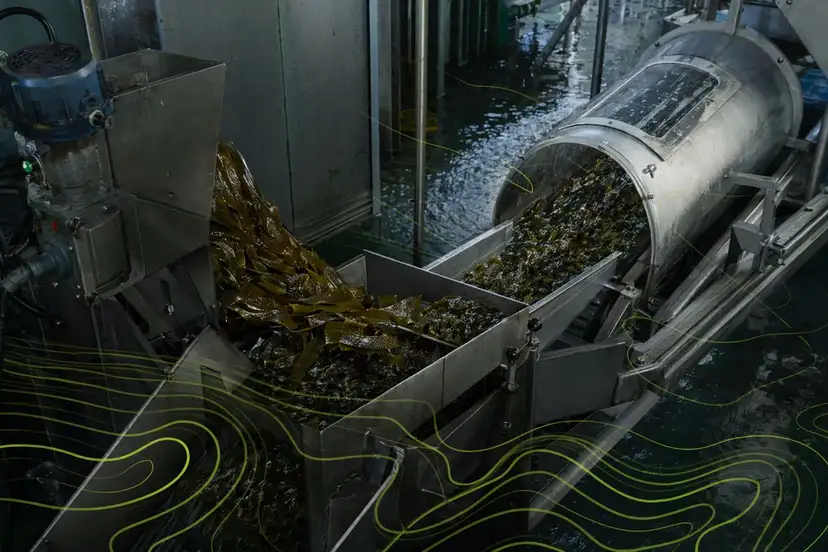
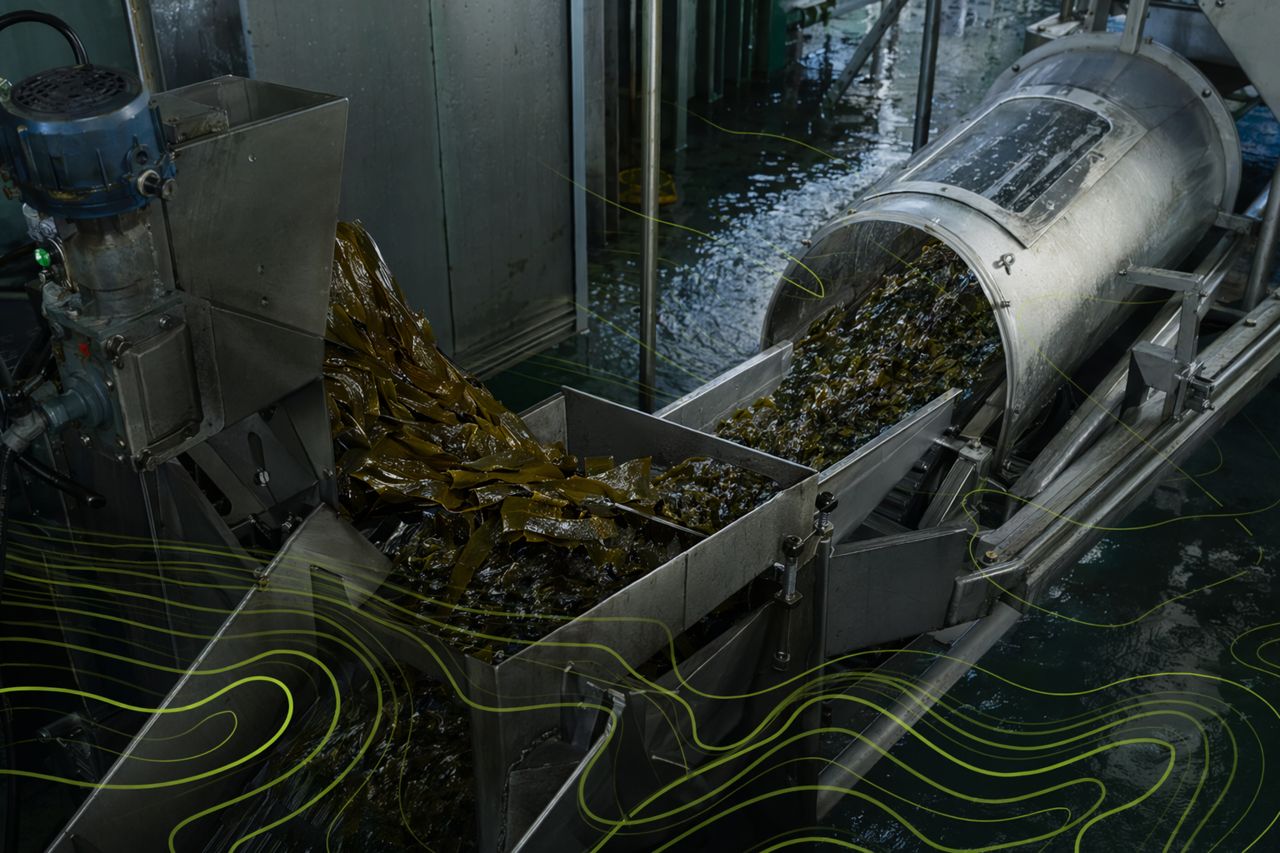
In a seaweed processing plant, extraction performance is not decided only inside the reactor. It starts upstream, where wet biomass is chopped, milled, hydrated, pumped, and presented to the extraction system.
For extraction managers, particle size preparation is a practical control point. Too coarse, and the plant leaves value locked inside intact tissue. Too fine, and the line can create high-viscosity slurries, overloaded screens, difficult centrifuge behavior, and inconsistent ingredient specifications.
Thalrix supports processors looking for an enzyme supplier for seaweed processing with a plant-floor view of preparation, hydrolysis, and separation. The goal is not to pulverize seaweed as much as possible. The goal is to prepare a slurry that extracts consistently, handles predictably, and protects downstream economics.
Why particle size matters before extraction
Seaweed is not a uniform raw material. Kelp ribbons, red algae fronds, and green seaweed structures vary by species, season, harvest condition, salt load, and storage history. When this biomass enters the plant, particle size affects four commercial outcomes:
- Extraction uniformity: Smaller, more consistent pieces expose more accessible surface area and reduce under-extracted pockets.
- Hydrolysis control: Enzymes perform more predictably when substrate access is even across the batch or continuous feed.
- Viscosity management: Excessive fines can release soluble gums too quickly, increasing slurry drag and pump load.
- Separation efficiency: Screens, decanters, filters, and centrifuges work better when solids distribution stays within a controllable band.
Particle preparation is therefore a balance between access and handleability.
Chopping sets the first operating window
Primary chopping is usually the first mechanical step after washing, dewatering, or thawing. It reduces long fronds and ribbons into pieces that can be metered, hydrated, and conveyed without bridging.
A good chopping strategy should support:
- Stable feed into mills, hydration tanks, or extraction vessels
- Reduced tangling around shafts, impellers, and pump inlets
- Faster wet-out of dried or partially dried seaweed
- Fewer oversized fragments reaching screens or discharge ports
Overly aggressive chopping can create ragged fines and variable fragments. Under-chopping can leave ribbons that fold, float, or travel through the system without fully opening. The practical target is a cut profile that the plant can feed continuously and hydrate evenly.
Milling is not just size reduction
Milling changes more than average particle size. It changes tissue rupture, water uptake, soluble release, and the early viscosity curve of the slurry.
For seaweed extraction, milling decisions should consider:
Surface area versus slurry resistance
Increasing surface area can improve extraction speed, especially where enzymes need access to cell wall structures or storage polysaccharides. But excessive fine generation may push the slurry into a high-resistance zone. The plant may see slower recirculation, unstable level control, higher motor load, or poor discharge behavior.
Consistency versus over-processing
A tighter particle distribution supports more repeatable extraction. However, chasing very fine material can consume energy, add heat, and create separation penalties later. In many plants, the best operating point is not the smallest particle size. It is the most consistent size range that supports the desired extraction profile.
Species-specific behavior
Brown seaweeds rich in alginate-like structures behave differently from red seaweeds containing carrageenan-type materials or green seaweed matrices. Milling that works well for one raw material may create a viscous, difficult slurry in another. Preparation should be matched to the substrate and the target product specification.
Hydration determines how particles behave in the tank
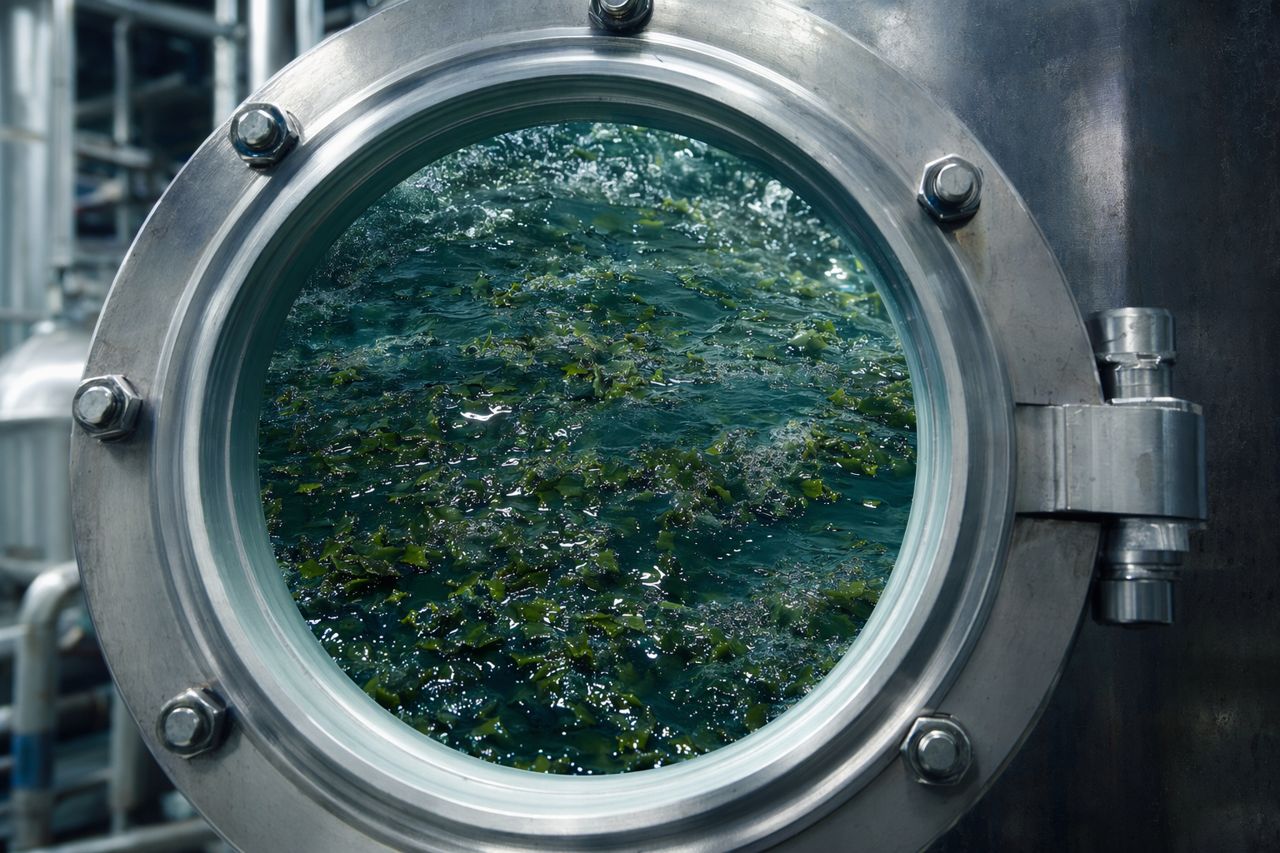
Dry or partially dried seaweed can look prepared mechanically but still extract unevenly if hydration is rushed. Poor wet-out creates floating clumps, dry cores, and inconsistent enzyme contact.
Effective hydration supports:
- More uniform slurry density
- Better temperature and pH distribution
- Reduced lumping during enzyme addition
- More predictable viscosity development
- Cleaner transfer into extraction and separation stages
Hydration should be treated as an operating step, not just a water addition. Agitation intensity, addition sequence, hold time, solids loading, and brine composition can all affect how particles open and disperse.
Slurry handling can protect or destroy preparation quality
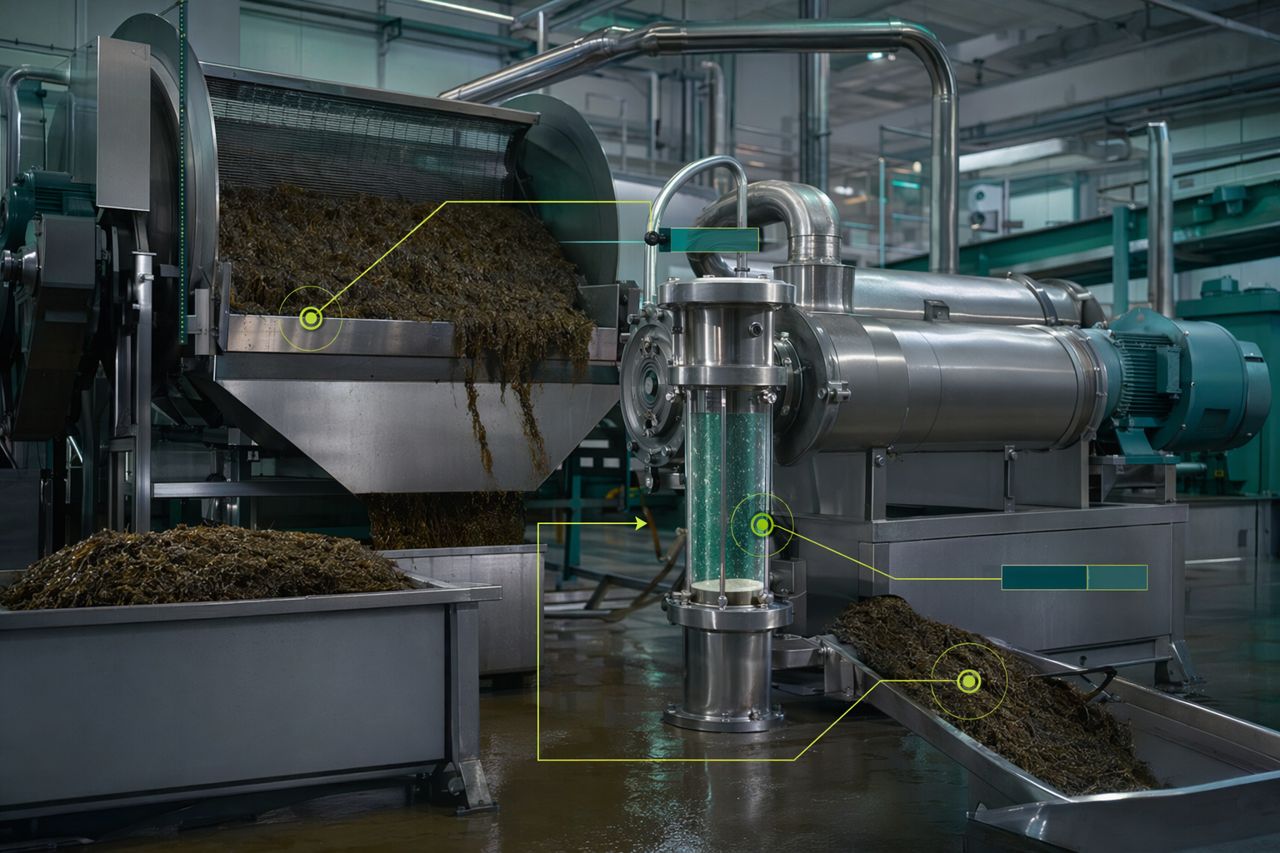
Even well-prepared biomass can become inconsistent if slurry handling is poorly controlled. Pump shear, pipe velocity, recirculation loops, dead zones, and tank geometry all influence particle breakdown and solids suspension.
Common plant-floor issues include:
- Settling of coarse particles before extraction is complete
- Fine solids accumulating in low-flow zones
- Air entrainment during transfer
- Viscosity spikes after recirculation
- Screen blinding from over-sheared material
- Batch-to-batch drift caused by inconsistent feed solids
For enzyme-assisted extraction, slurry handling should keep particles suspended without creating uncontrolled mechanical breakdown. The process should present the enzyme system with a repeatable substrate, not a constantly changing one.
How particle size preparation affects enzyme performance
Enzymes do not fix every mechanical problem. They work best when the seaweed matrix is accessible, hydrated, and evenly distributed.
Good preparation helps enzyme programs deliver:
- More controllable hydrolysis curves
- Improved release of soluble fractions
- Reduced viscosity at the right stage of the process
- Cleaner separation between liquid extract and residual solids
- Less variation in finished ingredient characteristics
Poor preparation can hide the value of an enzyme program. If large pieces remain under-hydrated, they may extract slowly. If too many fines are generated, the slurry may become difficult to pump or clarify. If particle size varies widely, the extraction result may drift even when dosing and temperature remain unchanged.
Finding the economic preparation window
The best preparation window is usually found by comparing total process economics, not only extraction yield.
A commercially useful review should include:
- Raw material variability by species, season, and storage condition
- Energy cost of chopping and milling
- Time required for hydration and extraction
- Pumping, agitation, and heat-transfer limits
- Screen loading and centrifuge behavior
- Solids discharge quality
- Finished extract clarity, viscosity, and specification consistency
- Rework, dilution, or filtration costs
If milling improves extraction but slows separation, the net value may be limited. If a slightly coarser profile gives stable hydrolysis and faster downstream handling, it may be the better plant setting.
Practical preparation checks for extraction teams
Before changing an enzyme program, extraction teams should verify the physical preparation system. Useful checks include:
-
Inspect incoming biomass form
Confirm whether the material is fresh, frozen, salted, dried, or partially dried. Each form hydrates and breaks differently.
-
Map the actual particle distribution
Do not rely only on equipment settings. Check what reaches the extraction vessel after conveyors, pumps, and recirculation.
-
Observe hydration behavior
Look for floating mats, dry cores, clumps, or rapid thickening during water addition.
-
Track viscosity timing
Note when the slurry becomes difficult: during hydration, heating, enzyme contact, pH adjustment, or transfer.
-
Compare separation performance
Link particle preparation to screen blinding, centrifuge solids quality, filtrate clarity, and discharge volume.
-
Tie results to finished specifications
The right preparation setting is the one that supports consistent ingredient output, not only a visually smaller slurry.
Where Thalrix fits
Thalrix works with seaweed processors to connect particle preparation with enzyme-assisted extraction performance. We focus on controllable hydrolysis, reduced viscosity where it matters, improved solids handling, and ingredient consistency at production scale.
Our technical conversations start with the realities of the plant:
- What species and raw material forms are being processed?
- Where does viscosity first become a constraint?
- Which separation step limits throughput?
- What finished extract specification must be protected?
- How much variation is coming from preparation rather than chemistry?
From there, Thalrix can help align enzyme selection with the physical condition of the slurry, so the program supports the equipment rather than fighting it.
Request a quote
Planning a seaweed extraction improvement trial or reviewing a current bottleneck? Share your raw material, target extract, process constraints, and separation setup through the on-site request a quote form. Thalrix will respond with a practical supply and technical support path for your plant.
Request a quote