From Wet Seaweed to Powder: A Practical Process-Flow Map
Wet seaweed is not a standard raw material. It arrives with variable moisture, sand, shells, salts, seasonal cell-wall strength, and a tendency to become difficult the moment viscosity rises in the wrong part of the line.
For extraction managers, the job is not simply to dry biomass. The job is to turn a tidal, mineral-rich raw material into a consistent powder specification while protecting throughput, separation performance, and downstream handling.
This process-flow map outlines the major plant stages from receiving to packing, and where controlled enzymatic processing can help improve extraction behavior, viscosity control, soluble fraction release, and solids management.
Thalrix works as an enzyme supplier for seaweed processing teams that need practical, plant-compatible solutions for hydrolysis control, cleaner separation, and repeatable ingredient quality.
The Process Flow at a Glance
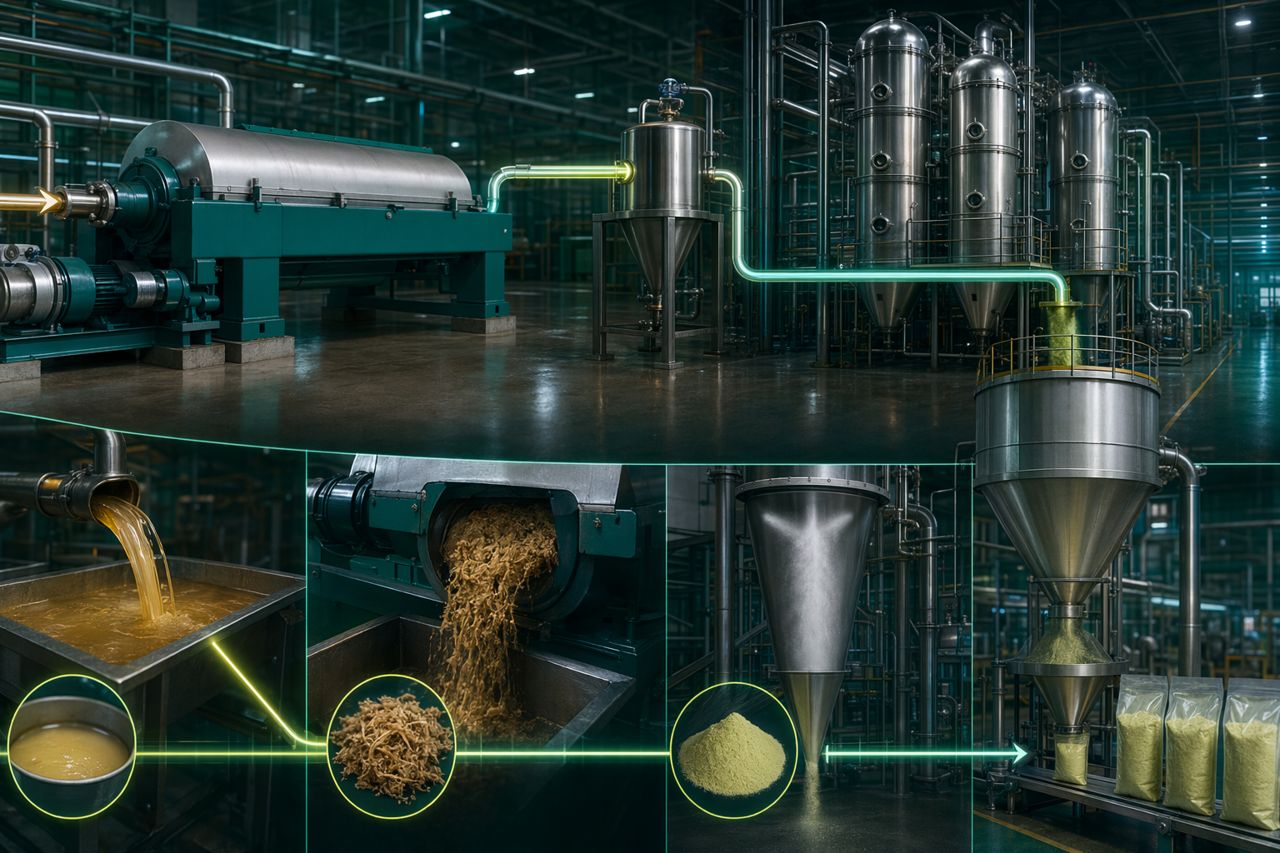
A typical wet-seaweed-to-powder line can be viewed in nine connected steps:
- Receiving and raw material grading
- Washing and foreign-material removal
- Draining and dewatering preparation
- Size reduction
- Extraction or controlled hydrolysis
- Solid-liquid separation
- Concentration
- Drying
- Milling, blending, and packing
Each stage affects the next. Poor washing loads the extraction tank with grit. Aggressive size reduction can drive viscosity early. Uncontrolled hydrolysis can overload separation. Weak concentration control can create drying bottlenecks. A well-built process map gives the team clear control points before small changes become plant-wide problems.
1. Receiving and Raw Material Grading
The line starts before the seaweed enters the washer. Receiving should identify the condition of the biomass and sort it into processable lots.
Key checks include:
- Species or blend identity
- Hold time since harvest
- Visible degradation
- Sand, shell, rope, stone, and plastic contamination
- Moisture variation
- Odor and color deviation
- Blade, stipe, or whole-plant composition
For extraction performance, lot variation matters. Older or stressed biomass may hydrate differently, break down faster, or release soluble material unevenly. A receiving protocol helps the plant decide whether a lot should run under standard conditions, adjusted extraction conditions, or be held back from premium specifications.
2. Washing and Foreign-Material Removal
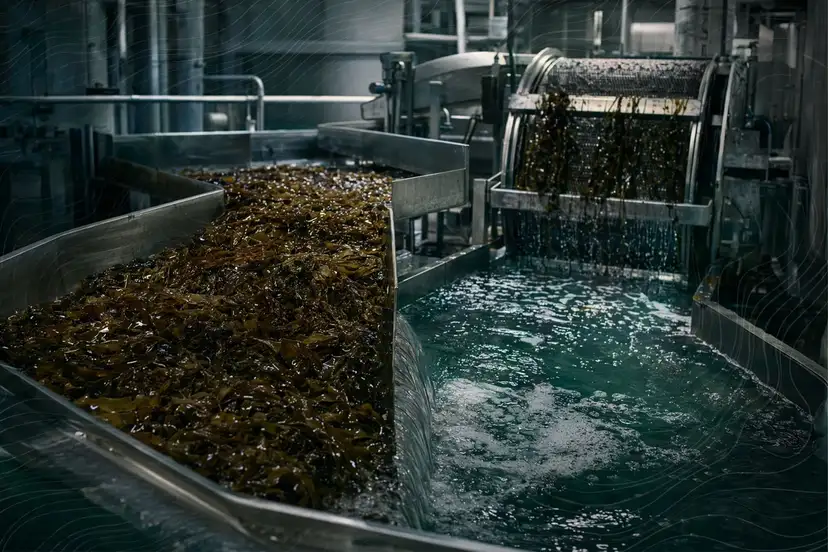
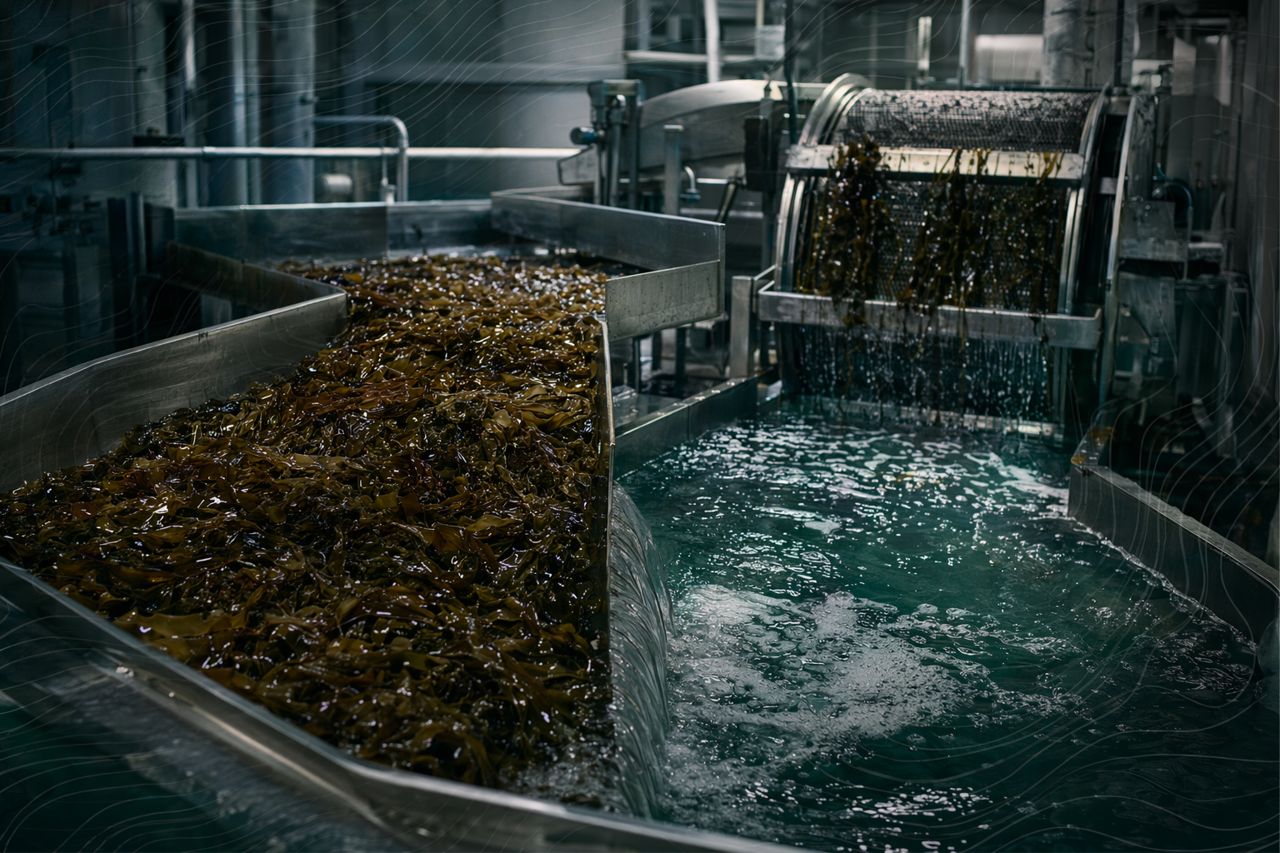
Washing is both a cleaning step and a process-protection step. Sand and mineral debris increase wear on pumps, screens, valves, and mills. Salt and surface contaminants can affect extraction balance. Shell fragments and stones can damage size-reduction equipment.
Practical washing systems may include:
- Flumes
- Agitated tanks
- Spray bars
- Rotary washers
- Dewatering screens
- Magnetic and manual inspection points
The goal is not just cleaner seaweed. The goal is a more predictable feedstock for extraction. If the washing stage is inconsistent, the extraction stage becomes a correction zone instead of a controlled conversion zone.
3. Draining and Dewatering Preparation
After washing, free water should be managed before cutting, grinding, or extraction. Too much uncontrolled carryover water can dilute extraction, extend heating time, change tank loading, and reduce batch-to-batch consistency.
At this point, plants often use:
- Inclined drain belts
- Vibrating screens
- Screw presses where suitable
- Gravity hold hoppers
- Controlled transfer conveyors
Good draining improves mass balance. It also helps operators understand whether changes in extraction performance are coming from the raw material or from uncontrolled dilution entering the tank.
4. Size Reduction
Size reduction increases surface area, supports extraction, and improves slurry movement. But it can also create problems if the target particle profile is too fine or too inconsistent.
Common equipment includes:
- Choppers
- Slicers
- Hammer mills
- Wet grinders
- Macerators
- Inline shear systems
The practical target is not maximum breakdown. The target is the right cut for the next operation. Over-processing can release gums and fines too early, increasing viscosity before the plant is ready to handle it. Under-processing can leave valuable fractions trapped and slow down extraction.
For enzyme-assisted seaweed processing, size reduction should support controlled access to the biomass structure without creating an unmanageable slurry.
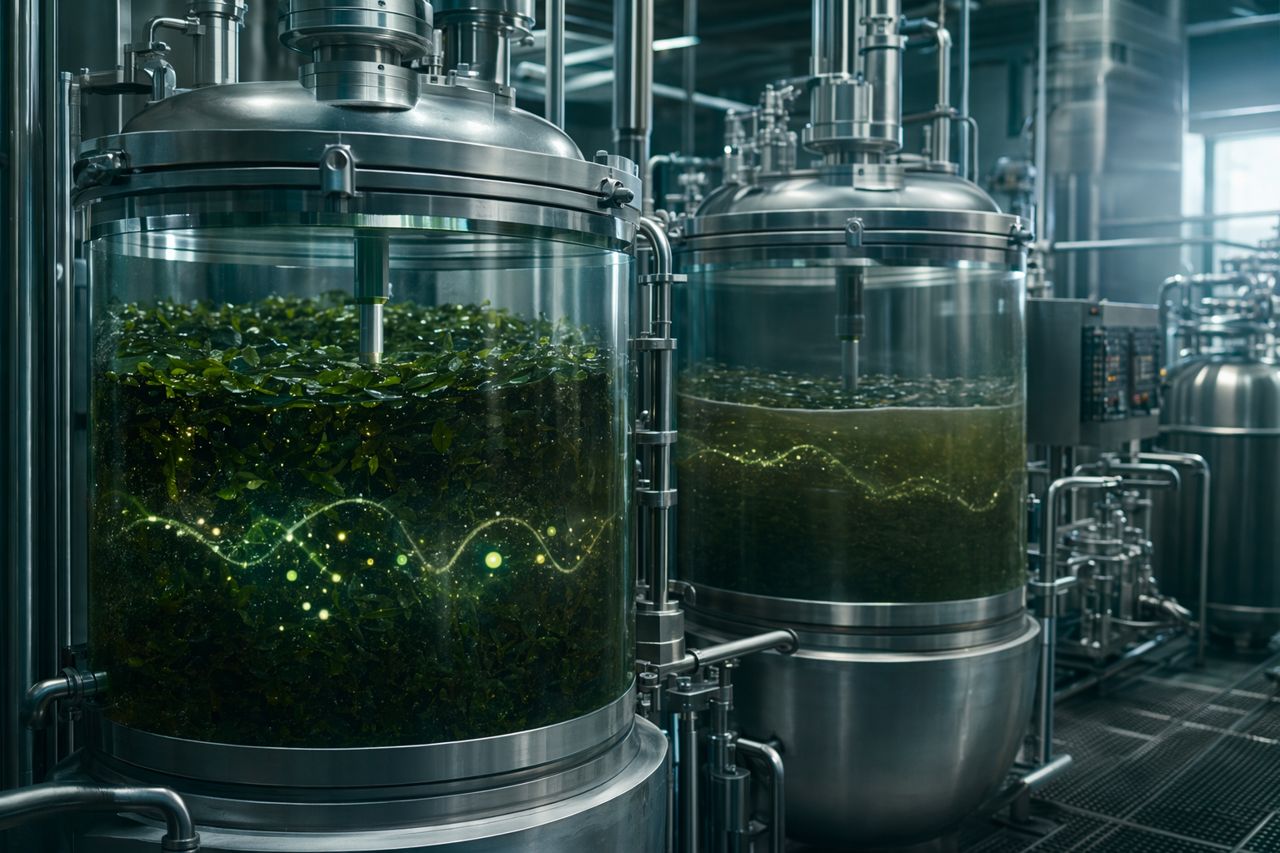
5. Extraction or Controlled Hydrolysis
This is where the line moves from mechanical preparation to fraction release. Depending on the product target, extraction may focus on soluble carbohydrates, proteins, minerals, pigments, hydrocolloid-related fractions, or broader functional ingredient streams.
The main operating questions are:
- What fraction needs to be released?
- How much viscosity can the tank, pump, and separator tolerate?
- Where should hydrolysis occur: before extraction, during extraction, or in a dedicated treatment stage?
- How will the plant stop or control the reaction once the target profile is reached?
- What specification must the downstream powder meet?
Enzymes can help plant teams create a more controllable extraction window. The value is not academic. The value is practical: improved slurry behavior, better soluble release, reduced tank drag, more manageable separation, and tighter repeatability between batches.
Where Enzymes Fit in the Flow
Enzyme selection depends on seaweed type, substrate target, process pH and temperature window, residence time, viscosity profile, and final specification. In seaweed processing, targeted enzyme systems may be used to:
- Open cell-wall structures more efficiently
- Reduce problematic viscosity during extraction
- Improve liquid-solid release before centrifugation or filtration
- Support more complete solubilization of selected fractions
- Reduce downstream fouling caused by poorly controlled breakdown
- Improve consistency when raw seaweed lots vary seasonally
Thalrix focuses on commercially practical enzyme deployment: what the tank can handle, what the separator can clear, what the dryer can accept, and what the customer specification requires.
6. Solid-Liquid Separation
After extraction or hydrolysis, the line must separate soluble process liquor from remaining solids. This is one of the most important control points in the entire flow.
Equipment may include:
- Vibrating screens
- Rotary screens
- Screw presses
- Decanter centrifuges
- Disc-stack centrifuges
- Filter presses
- Membrane or polishing filtration where appropriate
Separation success depends on particle size, viscosity, suspended solids load, and the degree of structural breakdown. If hydrolysis is too mild, yield may suffer. If it is too aggressive or poorly controlled, fines can increase and separation can become slower or less clean.
The best result is a slurry that releases liquid efficiently without overwhelming the separator with unstable fines or excessive viscosity.
7. Concentration
Once the liquid fraction is clarified enough for downstream handling, concentration reduces water load before drying. This improves dryer efficiency and can help stabilize the process before powder production.
Concentration may use:
- Evaporation
- Vacuum concentration
- Membrane concentration
- Combined clarification and concentration steps
At this stage, viscosity again becomes commercially important. Concentrated seaweed extracts can thicken rapidly. If upstream hydrolysis was controlled well, concentration is easier to manage, pumping is more predictable, and fouling risk can be reduced.
8. Drying
Drying turns extract or slurry into a stable powder format. Equipment selection depends on product target, heat sensitivity, particle requirements, and throughput.
Common drying options include:
- Spray drying
- Drum drying
- Belt drying
- Vacuum drying
- Freeze drying for selected high-value streams
Dryer performance is tied to feed consistency. A feed that swings in viscosity, solids, or insoluble load can create nozzle issues, uneven powder, scorched material, wall build-up, poor flowability, or off-spec moisture.
Controlled upstream enzymatic processing can support dryer stability by helping the plant deliver a more predictable feed to the drying stage.
9. Milling, Blending, and Packing
After drying, the product is milled, screened, blended, and packed to specification. This final stage determines powder presentation and customer usability.
Important controls include:
- Particle size distribution
- Bulk density
- Color consistency
- Flowability
- Moisture control
- Insoluble residue limits
- Batch blending accuracy
- Packaging barrier performance
A powder that looks acceptable can still fail commercially if it does not disperse, blend, or perform consistently for the buyer. Process control upstream is what makes final powder specification easier to hold.
Practical Control Points for Extraction Managers
A seaweed powder line becomes more reliable when the plant treats the process as a connected system, not as isolated unit operations.
Key control points include:
- Raw material lot grading before washing
- Wash quality and debris removal
- Water carryover after washing
- Size reduction profile
- Extraction solids loading
- Viscosity trend during heating and holding
- Enzyme contact time and process window
- Separator feed behavior
- Clarified liquor quality
- Concentrator fouling tendency
- Dryer feed consistency
- Final powder specification
When these points are visible, enzyme use can be tuned to real plant outcomes: higher usable recovery, cleaner phase separation, reduced rework, and fewer off-spec batches.
Common Bottlenecks in Wet Seaweed Processing
Viscosity rises too early
If the slurry thickens before extraction is complete, pumping and mixing become harder. The plant may need longer residence time, higher energy input, or dilution that creates downstream drying load.
Separation is slow or unstable
Fine solids, gels, and uncontrolled breakdown can reduce screen capacity or centrifuge clarity. This creates a direct bottleneck between extraction and concentration.
Concentration becomes difficult
Poorly clarified or overly viscous extract can foul heat-transfer surfaces, slow evaporation, and destabilize feed quality for drying.
Dryer feed varies by batch
If upstream extraction is inconsistent, drying becomes a correction step. That usually means lower efficiency, more operator intervention, and higher risk of off-spec powder.
Final powder misses specification
Color, solubility, flowability, insoluble load, and particle behavior can all reflect earlier process decisions. Powder quality is built from receiving onward.
Building an Enzyme Trial Around Plant Outcomes
A useful enzyme trial should be designed around measurable plant objectives, not isolated lab curiosity. For seaweed processors, that typically means defining target outcomes such as:
- Faster release of desired soluble fractions
- Reduced extraction viscosity
- Improved liquid recovery after separation
- Cleaner clarified liquor
- Lower solids carryover into concentration
- Better dryer feed behavior
- More consistent final powder specification
Trial planning should also account for available tanks, mixing capability, heating profile, hold time, pH control, downstream separator type, and cleaning expectations. The enzyme program must fit the plant, not force the plant to fit the enzyme.
A Practical Map Before the Next Batch
Before the next process change, map the line with four questions:
- Where does viscosity first become a problem?
- Where does the most valuable fraction remain trapped or lost?
- Where does separation limit throughput?
- Which final powder specification is hardest to hold?
Those answers identify where enzyme-supported hydrolysis can create the strongest commercial value.
Request a Quote
If your seaweed processing line needs better extraction control, cleaner separation, or a more consistent powder specification, Thalrix can help you evaluate the right enzyme approach for your plant conditions.
Use the on-site request a quote form to share your seaweed type, target ingredient, current bottleneck, and process stage. Our team will respond with a practical starting point for discussion.